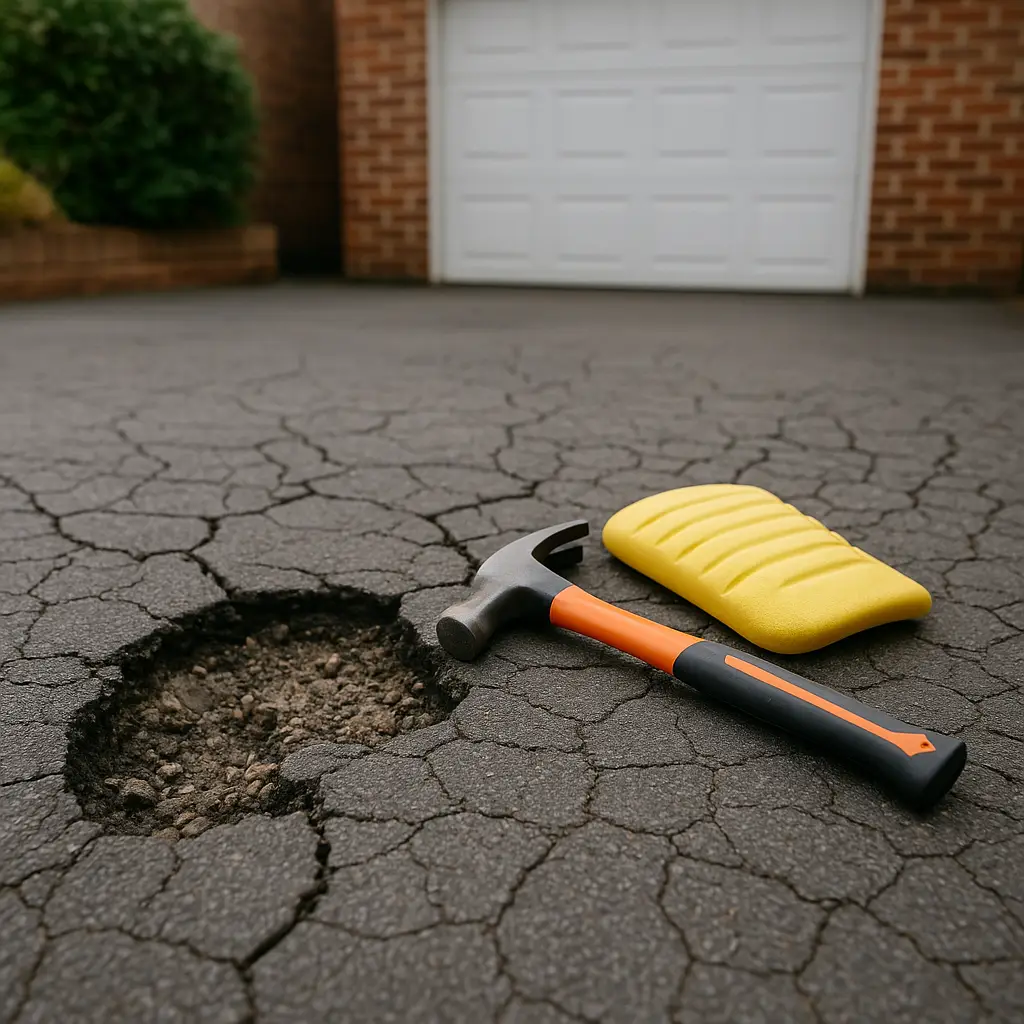
A well-maintained driveway not only enhances the curb appeal of your home but also ensures safety and functionality for your daily comings and goings. Over time, however, wear and tear, weather conditions, and heavy usage can lead to cracks, potholes, and other damage that demand attention. Deciding whether to tackle driveway repair as a DIY project or to call in the professionals can be a tricky choice, influenced by factors like the extent of damage, your skill level, and budget. In this blog post, we’ll explore key signs that indicate when you can confidently roll up your sleeves and handle repairs yourself, as well as when it’s best to seek expert help to ensure a durable, long-lasting driveway.
1. Types of Driveway Damage
Understanding the different types of driveway damage is crucial when deciding whether to tackle repairs yourself or call in the professionals. Common types of driveway damage include cracks, potholes, surface spalling, and drainage issues. Cracks are perhaps the most frequent problem, ranging from small hairline fractures to large, jagged splits that can worsen over time. Potholes often develop due to water infiltration and freeze-thaw cycles, creating unsafe and unsightly depressions. Surface spalling occurs when the top layer of the driveway begins to flake or peel away, typically caused by poor installation or exposure to harsh weather conditions. Lastly, drainage problems can lead to pooling water, which not only damages the driveway surface but can also affect the underlying base. Identifying the specific type of damage will help you determine the best repair approach and whether professional assistance is necessary for a long-lasting solution.
2. Assessing the Severity of the Damage
Before deciding whether to tackle driveway repairs yourself or call in the professionals, it’s crucial to accurately assess the extent of the damage. Minor cracks and small potholes can often be handled with DIY repair kits and some basic tools, saving you both time and money. However, if you notice large, deep cracks, significant sinking or uneven surfaces, or extensive crumbling, these signs indicate more serious underlying issues that may require professional intervention. Additionally, damage caused by poor drainage or foundation problems can worsen over time if not properly addressed. Taking a close look at the size, depth, and spread of the damage will help you make an informed decision, ensuring that your driveway remains safe, durable, and visually appealing. When in doubt, consulting a professional can prevent costly mistakes and guarantee a longer-lasting repair.
3. What You Can Handle Yourself
When it comes to driveway repair, knowing what tasks you can confidently tackle on your own can save you both time and money. Small cracks and surface-level damage are often manageable with a bit of DIY know-how. For instance, filling in minor cracks with a concrete or asphalt crack filler can prevent water from seeping in and causing further deterioration. Cleaning your driveway regularly and sealing it every few years can also help maintain its integrity and extend its lifespan.
If your driveway has shallow potholes or slight uneven patches, these can often be patched up with a cold patch asphalt mix or concrete patching compound, which are readily available at most hardware stores. These repairs typically require basic tools and minimal experience, making them ideal for homeowners comfortable with hands-on projects.
However, it’s important to recognise your limits. If the damage is extensive, such as large potholes, deep cracks, or significant subsidence, attempting a DIY fix may lead to more problems down the line. In such cases, consulting a professional ensures the repair is done correctly and safely, preserving the longevity and functionality of your driveway. Remember, small preventative repairs can be your best defense against costly, large-scale driveway issues.
4. Hire a Professional Contractor
While DIY driveway repairs can be effective for minor cracks and surface blemishes, there are certain situations where hiring a professional contractor is the best choice. Professional contractors bring expertise, specialised tools, and experience that ensure the repair is done correctly and lasts for years to come. If your driveway has extensive damage such as large cracks, deep potholes, significant sinking, or drainage issues, it’s time to call in the experts. They can properly assess the underlying causes of the damage and recommend the most suitable repair or replacement options. Additionally, professional contractors can handle complex materials like asphalt or concrete with precision, ensuring a smooth finish and structural integrity. By investing in a professional, you save yourself the time, effort, and potential costs associated with improper repairs, ultimately protecting your home’s curb appeal and value.