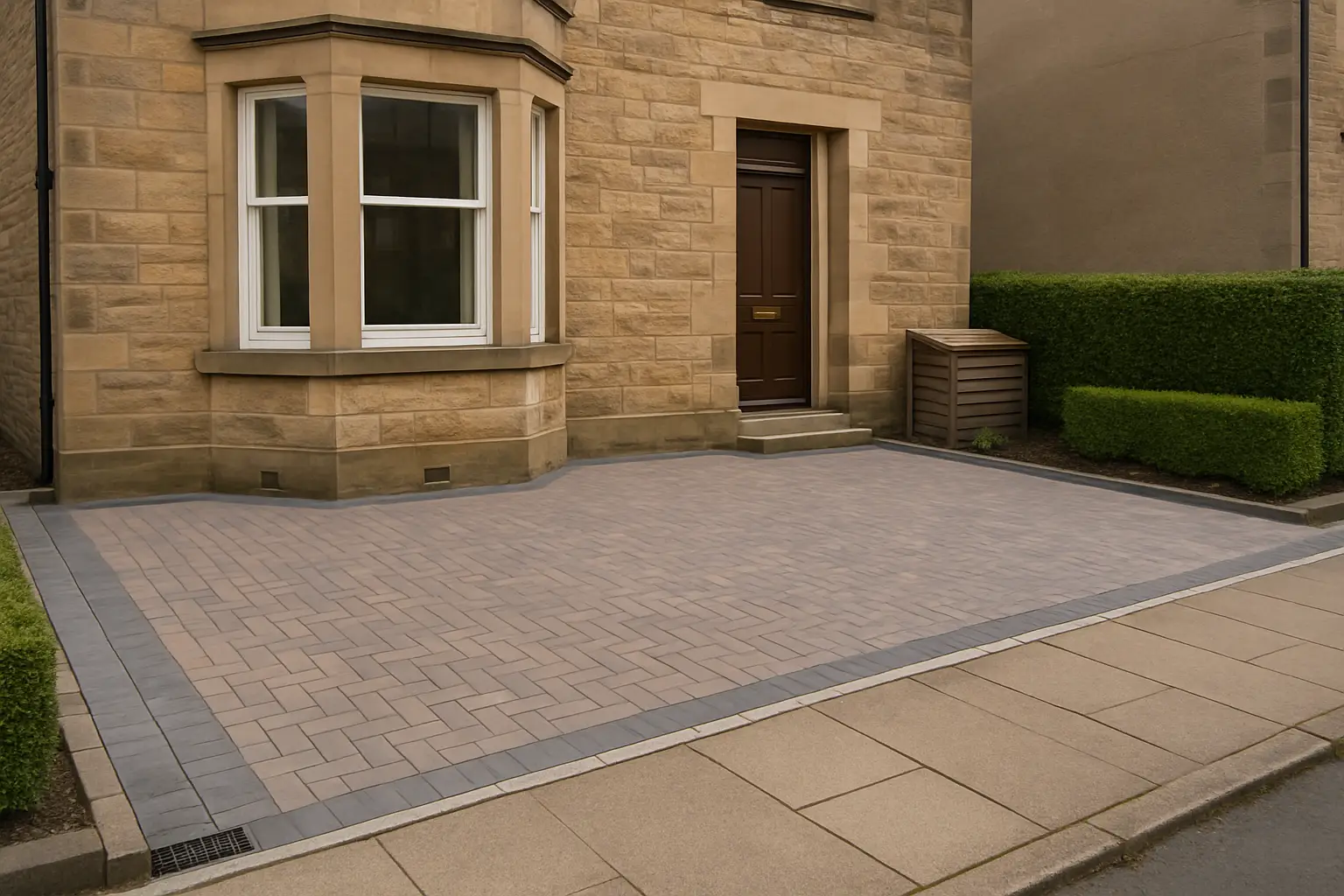
If you are planning a new driveway in Edinburgh, the timeline usually splits into three parts: pre-start admin, on-site build, and curing. For most standard homes, once you have accepted a quote, on-site work takes around 3 to 8 working days depending on size, ground conditions and chosen surface. The calendar time from first survey to finished driveway is often 2 to 6 weeks when diaries align and no consents are needed. If you also need a dropped kerb, utilities repositioning or complex drainage upgrades, allow extra time, as those items are controlled by third parties.
The Quick Answer
-
Survey to quote: typically 24 to 72 hours for a clear, itemised proposal.
-
Booking to start on site: usually 1 to 3 weeks in normal seasons, longer in peak spring and summer.
-
On-site construction: 3 to 8 working days for most 40 to 80 m² drives.
-
Curing and first use: varies by surface. Many block paved drives are usable for light parking within 24 to 48 hours after completion. Resin-bound often needs 24 to 48 hours before vehicles. Asphalt and concrete have their own guidance and may need longer before heavy vehicles.
These ranges are realistic for Edinburgh’s climate and housing stock, but your exact schedule will be confirmed after survey.
Phase 1: From Survey to Start Date
Your initial home survey takes about an hour. We measure access, levels and boundaries, check soil type and existing sub-base, review drainage options and note any services such as gas, water and telecoms. You then receive a fixed, itemised quote with a scaled plan or sketch. Once accepted, we finalise colours, edging, lighting and any garden tie-ins such as paths or planting beds. If a dropped kerb or a change to surface water drainage is required, we will explain the application process and how it affects timing. Finally, we agree a start date, delivery slots for materials and a waste plan so neighbours experience minimal disruption.
Phase 2: What Happens On Site
- Day 1: Set-up and protection. We fence off the work zone, protect any adjacent paving or turf, and position skips or grab access safely. Temporary ramps keep your front door reachable.
- Days 1 to 3: Excavation and cart-away. We remove the existing surface and dig to the specified depth, usually well below the finished level, then install geotextile where required. If we find soft spots or old rubble trenches, we stabilise them with additional sub-base or concrete, which avoids future settlement.
- Days 2 to 4: Sub-base and drainage. We place and compact MOT Type 1 in controlled layers to the designed thickness. Slot drains, channels or a soakaway are installed where needed so surface water has a safe destination. Levels are set to fall away from the house and threshold details are formed neatly.
- Days 4 to 6: Edging and laying course. Kerbs, soldier courses and any decorative setts are laid first to lock the shape. For block paving we add the bedding layer and begin laying patterns. For resin-bound we prepare the asphalt or concrete base, which may be installed earlier in the week depending on programme. For asphalt drives we install binder and surface courses as specified.
- Days 6 to 8: Finishing, jointing and cleanup. Block paving is compacted, joints are filled, and the surface is checked for line and level. Resin-bound is trowelled and left to cure in controlled conditions. We reinstate verges or planting strips, sweep down, remove barriers and run through care guidance.
Phase 3: Curing and First Use
Every surface has a recommended stand-off before heavy parking. Block paving is often fine for cars after compaction and jointing have settled, though we commonly advise 24 to 48 hours before regular parking. Resin-bound typically needs 24 to 48 hours before vehicles, sometimes longer in cool or damp weather. Asphalt benefits from a short period of light use while it hardens, but we avoid tight steering on the spot in the first 3 to 5 days. Concrete needs longer; we will give you a clear date for first parking.
What Can Add Time
- Weather. Cold snaps and persistent rain can delay resin or concrete pours and jointing. We plan around reliable windows and keep you updated.
- Hidden ground conditions. Uncharted services, soft ground or long-forgotten rubble can require stabilisation. Fixing it properly adds a day but saves years of trouble.
- Consents and utilities. Dropped kerbs, new drainage connections or meter moves involve third parties, so we sequence your driveway around their dates.
- Scope changes. Adding lighting, new steps, a bin store or garden beds is easiest when the area is open, and may extend the programme slightly.
Typical Durations by Surface
- Block paving. Most 50 to 70 m² drives complete in 5 to 7 working days including excavation, sub-base, edging, laying and jointing.
- Resin-bound over new base. Base installation plus resin day usually completes in 4 to 6 working days, then 24 to 48 hours cure before vehicles.
- Asphalt. Often 3 to 5 working days depending on layers, kerb detail and drainage, with cautious use in the first few days.
- Concrete. The on-site work may be swift, but curing for heavy vehicles takes longer; we will set expectations clearly at survey.
Many clients pair a new driveway with front-garden refresh items such as low walls, planters, lighting or a short path to the side gate. Adding these features may extend the programme by a couple of days, but doing it together keeps levels perfect, finishes consistent and overall disruption lower than splitting the work.
How We Keep You Moving
We aim to maintain access throughout. Where possible, we phase excavation and lay temporary crossing boards so you can reach the front door and, in some cases, park on the street without blocking the works. We keep the site tidy each evening and provide clear guidance on bin day and parcel deliveries.
If you would like a precise timeline for your home, book a free driveway survey. We will measure, check drainage, confirm any consent requirements and give you a fixed price with an agreed programme. You will know what happens each day and when you can park on your new drive with confidence.