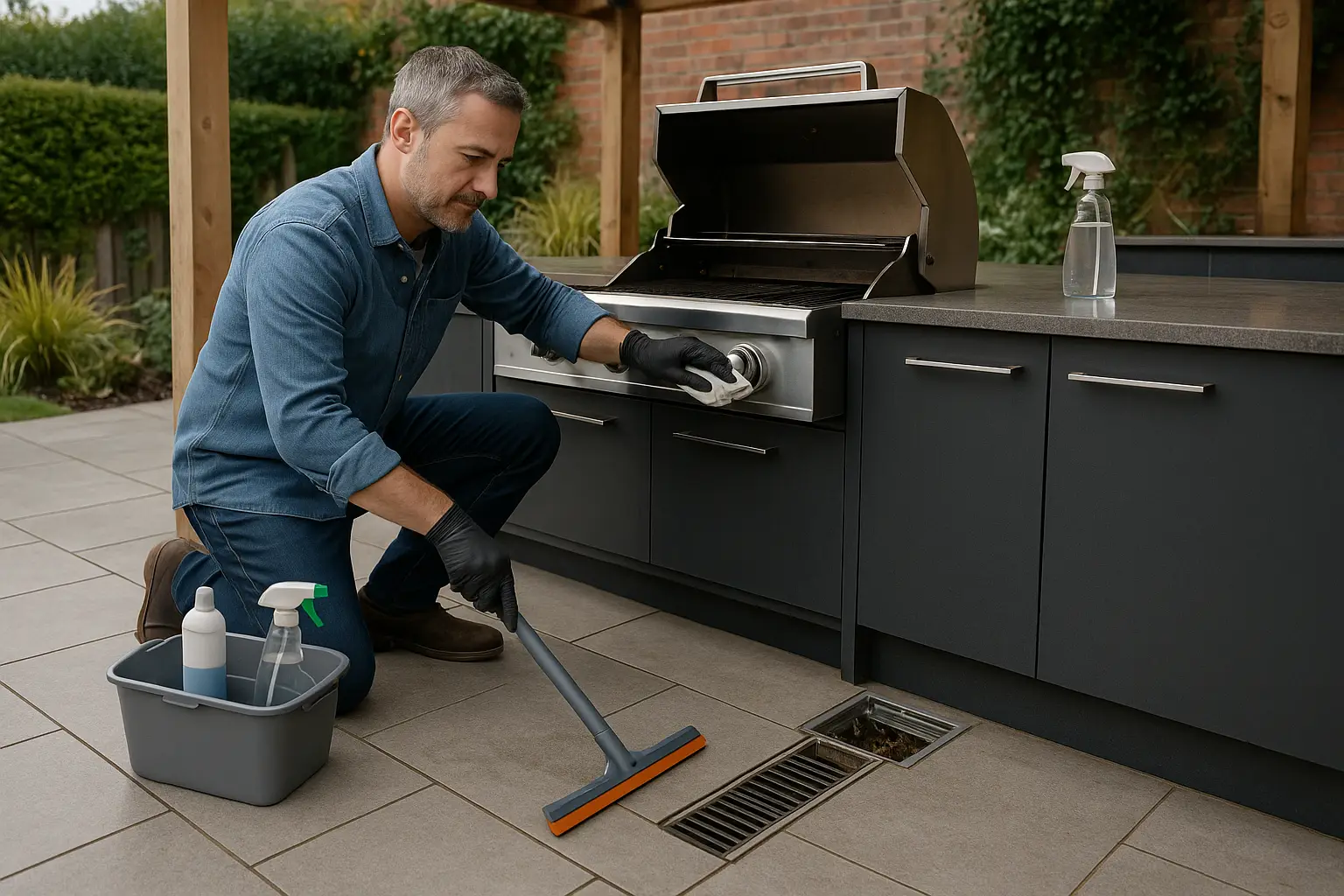
An outdoor kitchen works hard. It lives through rain, frost, heat, pollen, grease, and foot traffic. With a simple plan you can keep it safe underfoot, hygienic for food prep, and ready to use in every season. Good maintenance also protects warranties, extends the life of appliances, and preserves the look of premium materials such as porcelain, sintered stone, and stainless steel.
After-cook habits
Tidy habits right after cooking prevent most problems. Once the grill is warm but not scorching, brush the grates, empty or line the drip tray, and wipe the worktops with warm soapy water before drying them. Grease on paving becomes slippery, so give the terrace a quick wipe where needed and close lids once everything has cooled. Shut gas valves, unplug portable electrics, and cover the main grill if you use a fitted, breathable cover.
Your weekly rhythm
Set ten minutes aside each week for a light reset. Wipe doors and handles, rinse food caddies, and sweep the terrace so grit does not score tiles. Check channel drains and gulley grates for leaves or silt so water can run freely. If you cook on charcoal, remove cold ash and keep fuel in sealed bins to avoid moisture and odours.
Monthly deep clean and checks
A monthly session keeps performance high. Degrease flavour bars, burner covers, and the inside of lids. Lift gas burners gently and clear ports with a soft brush. Wash cabinet interiors and check runners and hinges. Inspect grout, silicone joints, and movement joints for gaps, then top up as required. Clean pergola beams, screens, and any clear roof panels. Test outdoor RCDs using the test button and replace cracked socket covers. For outdoor fridges, wipe door seals, vacuum rear coils, and confirm the thermostat is holding temperature.
Seasonal care
Spring
Give paving a proper clean with a product suited to porcelain or stone, then treat any algae before it spreads. Reseal timber accents if water no longer beads. Recommission water lines, check traps for odour seals, and confirm there are no leaks.
Summer
Heavy use brings grease and crumbs. Step up grate and drip-tray cleaning and keep fridge vents clear of dust. Shade refrigerators from direct sun where possible and confirm the pergola gutters are clear before storms.
Autumn
Falling leaves clog gutters and drains, so flush channel drains and empty silt baskets. Inspect covers and tie-downs before the first big wind. Check lighting and replace tired lamps so darker evenings remain safe.
Winter
Before hard frosts, isolate and drain water supplies, including outdoor taps and sinks. Store cushions dry and remove small plug-in appliances. Keep gas cylinders upright in a ventilated store. For kamados and pizza ovens, brush out ash, fit a flue cap, and keep vents closed to reduce damp.
Looking after common materials
- Porcelain paving and sintered worktops
These are ideal for the UK climate because they are non-porous and frost resistant. Use pH-neutral cleaner and avoid waxes that leave a film. Good surface falls and clear drains are your best defence against slippery algae. - Natural stone
Use stone-safe cleaner and reseal to the manufacturer’s schedule. Avoid acidic products on limestone and marble. Keep joints sound so water cannot sit beneath edges. - Stainless steel
Rinse fertiliser and sea salt residues promptly, then clean with warm soapy water and finish with a stainless spray, wiping with the grain. Avoid steel wool which can cause rust specks. - Timber
Wash with mild soap and re-oil or re-stain when water stops beading. Keep timber clear of direct heat and check fixings for movement after hot spells and frosts. - Pergolas, louvres, and clear roofs
Use a soft brush and hose on louvre blades or polycarbonate panels. Keep gutters and downpipes clear so runoff does not sheet across tiles.
Appliances and services
- Gas grills
Inspect hoses for cracking and check igniters monthly. Arrange an annual Gas Safe inspection for fixed pipework and connections. Keep a dry-powder extinguisher and fire blanket within reach. - Charcoal and kamado cookers
Empty ash regularly and keep the firebox dry. Replace worn gasket seals for temperature control. Use dry, quality fuel to reduce start-up smoke and tar. - Pizza ovens
Brush the stone clean and avoid detergents on the cooking surface. Inspect the flue and cap for soot build-up and clear it before the next long cook. - Outdoor fridges
Keep units level and ventilated, with vents clear of dust and cobwebs. Do not overload shelves, which harms airflow and efficiency. - Sinks and taps
Use a proper trap to control odour, clean strainers weekly, and drain lines before frost. After winter, open isolation valves slowly and check for drips. - Electrics and lighting
All outdoor electrics should be on RCD-protected circuits with IP-rated fittings. Test RCDs twice a year and replace any damaged seals or covers. Keep switches where you can reach them without crossing the hot zone.
Drainage and slip prevention
Safe footing depends on clear routes for water. Maintain the designed falls by keeping grout lines sound and drains unblocked. After heavy rain, use a quick squeegee pass on porcelain to prevent standing films that can attract algae. If you see persistent puddles, investigate low spots rather than living with them.
Hygiene and food safety
Treat your outdoor kitchen like an indoor one. Keep separate cloths for raw and cooked foods, disinfect chopping boards, and store utensils inside closed cabinets. Clean handles and knobs frequently since greasy fingers travel. Outdoor bins should have tight lids and be emptied before smells attract pests.
Troubleshooting common issues
If cooks suddenly feel smoky, clean drip trays and grates, trim fat before grilling, and cook with lids closed more often. If a greasy film appears under a roof, increase your monthly degrease routine and improve airflow by opening sides during searing. If the fridge struggles in heat, move it out of direct sun, clear vents, and check seals with the paper-test. If paving feels slippery, treat algae and review drainage.
A few minutes after each cook, a short weekly reset, and a monthly deep clean are enough to keep an outdoor kitchen looking sharp and performing perfectly. Combine that routine with simple seasonal steps and your space will be ready for impromptu burgers in July and long, cosy stews in November. Good maintenance protects your investment, keeps everyone safe, and makes every cook feel effortless.