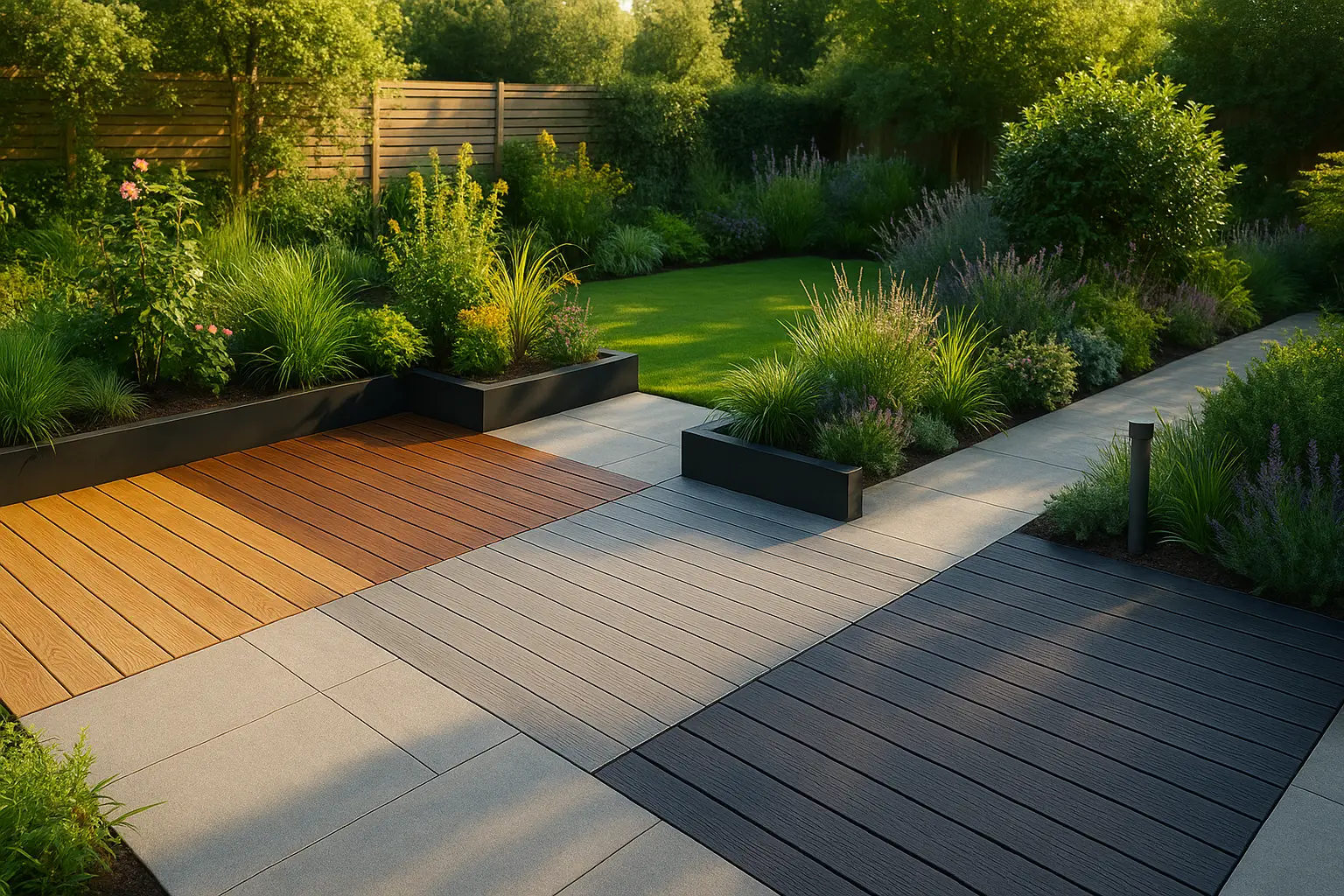
Choosing decking for your garden should feel exciting, not overwhelming. We deal with damp winters, clay soils that move a little, and bright summer spells that can heat darker boards. Those conditions matter because they affect how different deck materials look, feel and last. This guide walks you through the four most popular options for Maybury Landscaping clients, how each behaves in real weather, and a simple way to pick with confidence.
What really matters in our climate
Moisture, shade and ground movement are the big three. Winter damp can encourage algae, so you want a surface with honest grip and a sub-frame that stays airy. Shade from fences and trees means some boards need a little more care to keep clean. Clay can swell and shrink across seasons, which is why a well built base with solid edge restraints is essential for any material. Keep those truths in mind as you compare your options.
Softwood decking
Softwood, usually pressure treated pine or spruce, is the classic entry point. It gives an instant warm timber look and suits cottage plots, family gardens and informal spaces. It is easy to cut on site, simple to repair in small sections and friendly on the budget.
The trade off is maintenance. In our damp winters softwood benefits from a yearly clean and treatment to keep algae away and colour even. Without good detailing boards can cup, twist or silver unevenly, particularly in shaded corners. If you choose softwood, give the sub-frame ventilation, set gentle falls so rain runs off rather than sitting, and use quality stainless or coated fixings to prevent black staining. For tight budgets and DIY friendly projects it remains a valid, good looking choice provided you are happy to look after it.
Hardwood decking
Hardwood is where the deck starts to feel luxurious underfoot. Species such as Iroko, oak and thermally modified timbers are denser and more stable than softwood, with a grain that reads as premium even from the patio doors. That means fewer issues with movement and a surface that can age beautifully.
You will pay more at the start and you will still want to oil or seal it if you wish to keep the deeper colour. Left to weather it will silver in a graceful way that many clients love. Heavier boards call for proper fixings and careful installation, so allow for skilled labour. If you value natural materials and can commit to occasional care, hardwood delivers a timeless result that pairs well with brick, stone and render homes.
Composite decking
Composite boards blend wood fibres with polymer to mimic timber while reducing upkeep. For busy households this balance is hard to beat. Good composites resist rot and mould, hold colour well and do not need staining. Many systems use hidden fixings for a clean, modern finish and slip resistance on better ranges is excellent even after a rainy week.
There are two caveats. Cheaper boards can fade or scratch more readily, and very dark colours can feel warm in full sun. Choose a brand with a strong UK warranty, tested wet slip ratings and proper ventilation space below the frame. If low maintenance is top of your list, composite will likely sit at the top of your shortlist.
Premium polymer and capped boards
At the top of the performance tree sit high end polymer or heavily capped composite boards. Think tough surfaces, realistic texture and very low upkeep. In exposed plots or near the coast, where salt air and heavy weather test materials, these boards earn their keep. Installation tolerances are tighter and the upfront price is higher, yet the reward is a deck that shrugs off algae, wipes clean and stays smart for years. If you are building a showpiece terrace or you simply want the most durable option with the least work, look here.
Which is best for your garden
There is no single winner. The best choice is the one that matches how you live.
-
If you want the lowest yearly effort, choose composite or premium polymer.
-
If you love the character of real wood and do not mind a little care, choose hardwood.
-
If you are building to a tight budget and are happy to clean and treat annually, choose softwood.
-
If your site is exposed to wind and weather or sits near the estuary, premium polymer and top tier composite give extra resilience that often justifies the price.
Build quality matters more than brochures
Whatever you choose, the structure and details decide how long your deck stays safe and handsome. Use a deep, well compacted sub-base and strong edge restraints. Consider geogrids or cellular confinement on clay. Respect expansion gaps so seasonal movement does not create ridges. Keep the frame ventilated, set gentle falls and route water to drains so the surface dries quickly after rain. These fundamentals do more for day to day comfort than any colour swatch.
Safety and comfort in all seasons
Grip wins on wet days. Pick a board with a tested wet slip rating and keep surfaces clean. Plan lighting so steps and edges are easy to read at night, with a brighter pool where people turn or carry trays. If you are connecting the deck to an outdoor kitchen, choose finishes that wipe clean and do not become slick when a little oil or water reaches them.
Care that actually helps
Most decks need less work than you think. Sweep grit before it polishes the surface. Treat algae early on shaded runs. Composite and premium polymer respond well to a gentle wash each spring. Hardwood benefits from oil if you want to hold its colour. Softwood appreciates a yearly clean and treatment. Little and often beats occasional heavy pressure washing, which can damage fixings and jointing if overdone.
A simple way to decide
Stand in the garden and picture how you will use the space on an ordinary Tuesday evening. If you want a deck that looks smart with almost no fuss, a well specified composite or premium polymer in a mid tone will serve you well. If your heart is set on real wood and you enjoy a small care ritual, hardwood will repay you with warmth and character. If the priority is getting a project built now for the least cost, softwood gives a traditional look and an easy path to upgrade later.
The takeaway
Maybury Landscaping builds with all four materials, and each can be a great choice. Match the board to your lifestyle and site, invest in a strong sub-structure, and keep the detailing honest. Do that and your deck will look good on day one and still feel solid five winters from now. If you would like our team to suggest samples and a layout that fits your home, we are ready to help.
Ready to choose the right decking for your garden? Book a free site visit.