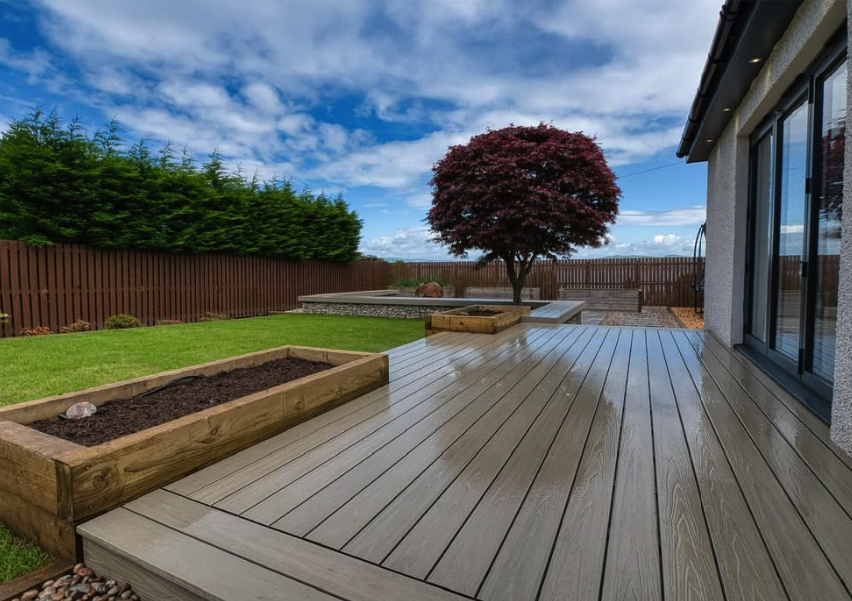
Sloping gardens are one of the most misunderstood outdoor spaces in Scotland. Many homeowners believe a steep gradient limits what they can achieve — that a beautiful, usable garden is only possible on a flat plot.
But this is a myth.
In reality, a sloping garden in Fife offers more creative potential than a level one. With the right landscaping ideas, strategic design, and professional execution, a gradient becomes an asset — adding depth, drama, structure, and unique character that flat gardens simply cannot provide.
Whether you’re dealing with a gentle incline in Dunfermline, a multi-level hillside plot in Dalgety Bay, or a rugged, exposed slope near the Fife coastline, there are smart, proven ways to transform challenging terrain into a stunning and functional outdoor space.
This expert guide will show you exactly how.
Sloping Gardens Are Actually an Opportunity
Before diving into specific landscaping ideas, it’s important to reframe how you look at a gradient.
Most homeowners approach a sloping garden with frustration:
-
“Nothing sits level.”
-
“Rainwater runs straight down.”
-
“It’s impossible to enjoy the space.”
-
“It’ll cost too much to fix.”
But professional landscapers see something entirely different. A slope isn’t a limitation — it’s an asset. Natural height variation adds instant character, creates depth, and allows you to design a garden that feels layered, dynamic, and far more visually interesting than a completely flat plot.
A gradient, when approached strategically, becomes the foundation for a truly exceptional outdoor space.
A sloping garden offers built-in advantages that flatter planting schemes, elevate design features, and enhance usability. Height differences naturally form separate zones without bulky structures, allowing you to create distinct areas for dining, relaxation, children’s play, vegetable beds, or wildlife habitats. A raised terrace or upper level provides viewpoints you simply could not achieve in a level garden, turning everyday seating into a scenic lookout.
Slopes also create microclimates — sunny pockets, sheltered corners, and shaded niches — enabling diverse planting that thrives in different conditions. Dramatic features such as waterfalls, tiered retaining walls, stepped paths, rockeries, and sculptural steps feel more dramatic and purposeful on a gradient, where gravity and perspective amplify their impact.
Best of all, a well-designed slope doesn’t reduce usability — it increases it. When shaped into terraces or structured levels, each area becomes a functional platform with a clear purpose and a natural flow between spaces.
The key is not to fight the slope, but to work with it. When you embrace the gradient, rather than trying to erase it, you unlock the opportunity to build a garden that feels intentional, balanced, and beautifully unique.
Landscaping Ideas for Sloping Gardens in Fife
Below is a detailed breakdown of the most effective structural, functional, and aesthetic landscaping ideas used by top landscaping teams across Fife and Scotland. Each idea includes explanations, practical examples, and insights drawn from real projects.
1. Multi-Level Terracing: The Most Reliable Way to Add Usable Space
Terracing is widely considered the gold standard for transforming a sloping garden into a set of practical, beautifully structured spaces. Instead of fighting the gradient, terracing works by cutting into the slope to form a series of level platforms, each one supported by carefully constructed retaining walls. These walls can be built from a variety of materials — sleeper timber, natural stone, concrete blocks, gabion baskets, brick, or rendered masonry — allowing you to match the design to the garden’s style and the property’s character.
Terracing works so well because it turns previously unusable ground into genuinely functional square footage. By interrupting the slope with solid, flat levels, you gain safe, stable areas for seating, lawns, planting, entertaining, or children’s play. It also greatly improves water management by slowing and redirecting runoff, preventing erosion, and protecting the structures and planting below. The result is a clean, organised layout that feels intentional and easy to navigate, with strong structural stability at every level. Terraces also create perfect opportunities for integrated lighting, steps, and layered planting schemes that soften the walls and add seasonal colour.
In Fife, terracing is especially valuable in areas where gradients are common. Steep back gardens in Queensferry, the uneven plots typical of new-build estates in Dunfermline, and older hillside properties across many Fife towns all benefit enormously from a terraced approach. These are places where flat space comes at a premium, and terracing allows homeowners to reclaim their gardens without compromising safety or aesthetics.
2. Using Retaining Walls to Shape and Support the Garden
Retaining walls are a core element in most sloping garden designs, but their role extends far beyond simply holding back soil. A well-constructed retaining wall becomes an architectural feature in its own right — shaping the layout, adding height and structure, and contributing significantly to the garden’s overall aesthetic. When designed properly, retaining walls work both functionally and visually, helping to create a landscape that feels cohesive, intentional, and secure.
Popular Retaining Wall Options in Fife
a. Timber Sleepers
Timber sleepers remain one of the most cost-effective solutions for retaining soil on a slope. Their natural appearance blends beautifully with lawns, planting beds, and rustic garden styles, but they also work surprisingly well in contemporary spaces thanks to their clean, simple lines. Sleepers are quick to install and adaptable to both small and large slopes, making them a popular choice for homeowners seeking practical structure without the premium price tag.
b. Natural Stone
For a timeless and premium look, natural stone is unmatched. Its weight, texture, and inherent durability make it ideal for the traditional architecture found throughout Fife and the wider Scottish landscape. Stone retaining walls feel rooted in place, complement historic homes, and withstand decades of weather exposure with minimal maintenance. They are particularly suited to sloping gardens where a classic, heritage aesthetic is desired.
c. Gabion Walls
Gabion walls — wire cages filled with stone — offer a modern, industrial style that’s become increasingly popular. They provide excellent drainage because water flows freely through the stone, reducing pressure behind the wall. Gabions are incredibly strong, long-lasting, and perfect for larger slopes where structural integrity and visual impact are both priorities. They pair well with modern landscaping ideas and can be filled with stones that complement the local geology of Fife.
d. Concrete or Rendered Walls
Concrete block or rendered retaining walls create sharp, contemporary lines ideal for modern new builds and minimalist garden designs. Their smooth surfaces allow for integrated lighting, built-in seating, inset planters, or sleek steps that link different levels. They deliver excellent strength and versatility, making them a top choice for homeowners wanting a polished, architectural finish.
Industry Tip:
Proper drainage behind retaining walls is absolutely non-negotiable. Without gravel backfill and dedicated weep holes to release water, hydrostatic pressure will build up behind the structure. Over time, this pressure can push even a professionally built wall forward — and it’s one of the most common failure points in DIY installations. Getting drainage right from the start protects both the wall and the rest of your garden for years to come.