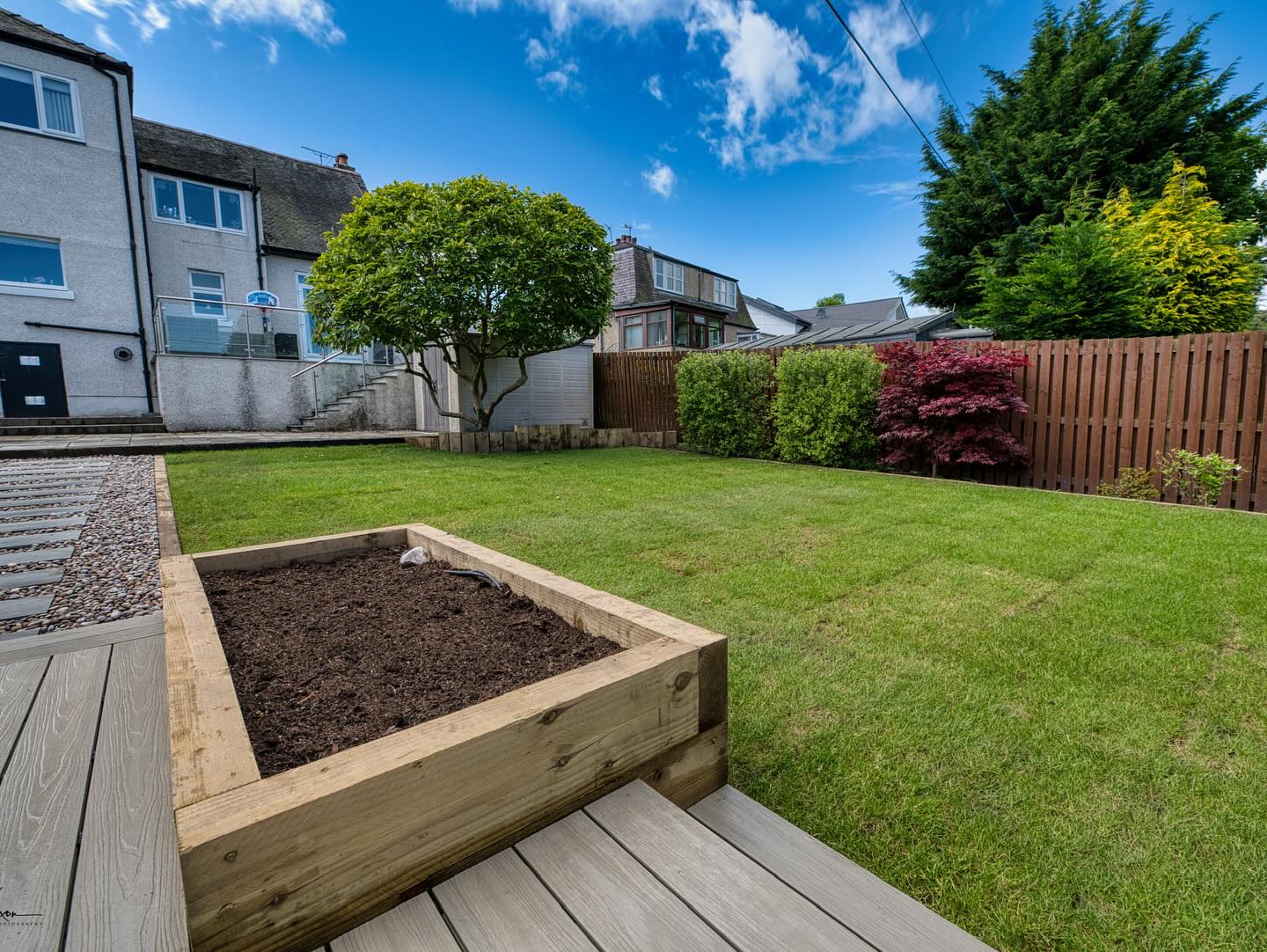
Having a front garden alongside a driveway is not just about appearance. It plays a practical role in how the space functions, how water is managed, and how the property sits within the street. In Edinburgh especially, where weather, gradients, and architectural character all influence design decisions, the relationship between the front garden and driveway needs to be considered as a single, connected space rather than two separate elements.
When this is ignored, problems tend to appear quickly. Driveways can feel visually dominant, turning the front of the property into a hard, exposed area that lacks structure or softness. Planting is often added later in small, disconnected patches, offering little benefit beyond surface-level decoration. From a functional perspective, water run-off is poorly controlled, soil washes onto paved areas, and maintenance becomes more demanding than it should be.
By designing the front garden and driveway together from the outset, these issues can be avoided. Clear routes for vehicles and pedestrians can be established early, allowing access to feel intuitive rather than forced. Planting areas can be positioned deliberately to frame the driveway, manage levels, and absorb surface water, rather than simply filling leftover space. This creates a frontage that feels composed and intentional, while also standing up better to Edinburgh’s wet climate and seasonal changes.
Designing layout and movement
Once the front garden and driveway are viewed as a single space, the next step is to understand how people and vehicles move through it on a daily basis. In Edinburgh, where front gardens are often compact, sloped, or close to the pavement, movement quickly dictates whether a design feels comfortable or compromised.
A well-designed layout begins with vehicle access. The position of the driveway should allow cars to enter and exit safely without excessive manoeuvring, particularly on busier streets. Turning space, sightlines, and the angle of approach all matter. When these are misjudged, homeowners often compensate by widening hardstanding later, which erodes planting areas and disrupts the balance of the front garden.
Pedestrian movement is just as important. The route from pavement to front door should feel obvious and direct, not secondary to the driveway. When footpaths are squeezed between parked cars or forced to cross vehicle routes awkwardly, the space becomes less welcoming and more difficult to use in everyday life. A clear, well-positioned path establishes hierarchy within the frontage, reinforcing that the garden and driveway are part of a considered design rather than competing functions.
Balancing hard surfaces with planting
Driveways are, by necessity, robust and functional. Without careful planning, however, they can easily dominate the frontage and strip the space of character. In Edinburgh, this is a common issue, particularly where parking is prioritised and front gardens are relatively shallow. Large expanses of paving or blockwork may solve access problems, but they often create an exposed, harsh appearance that feels out of keeping with the surrounding street. Over time, these spaces also tend to show wear more quickly, as dirt, moss, and surface water become more noticeable without the visual relief of planting.
Planting plays a crucial role in counterbalancing this effect. When positioned deliberately, it softens hard edges, breaks up long lines of paving, and helps anchor the driveway within the wider landscape. The key is to treat planting as structure rather than decoration. Beds should be clearly defined, proportionate to the space, and designed to frame the driveway rather than compete with it.
Choosing materials that create visual continuity
With the balance between hard surfaces and planting established, material choice becomes the element that ties the front garden and driveway together visually. It must not only look appropriate alongside the property, but also perform reliably in a wet, often cold climate.
The most successful front gardens and driveways use a restrained palette of materials that relate to one another rather than compete. This does not mean using the same surface everywhere, but it does mean choosing finishes that share similar tones, textures, or proportions.
Our Approach
Designing front gardens and driveways as a single landscape is central to the way Maybury Landscaping approaches frontage projects. Rather than starting with surfaces or planting in isolation, the focus is on how the space functions as a whole and how it will age over time.
By addressing movement, levels, drainage, materials, and planting together, the finished frontage feels resolved rather than assembled. This approach reduces long-term maintenance issues and avoids the common problems seen when driveways and gardens are treated as separate works.
If you are considering changes to your front garden and driveway, contact us today for free design and site visit.