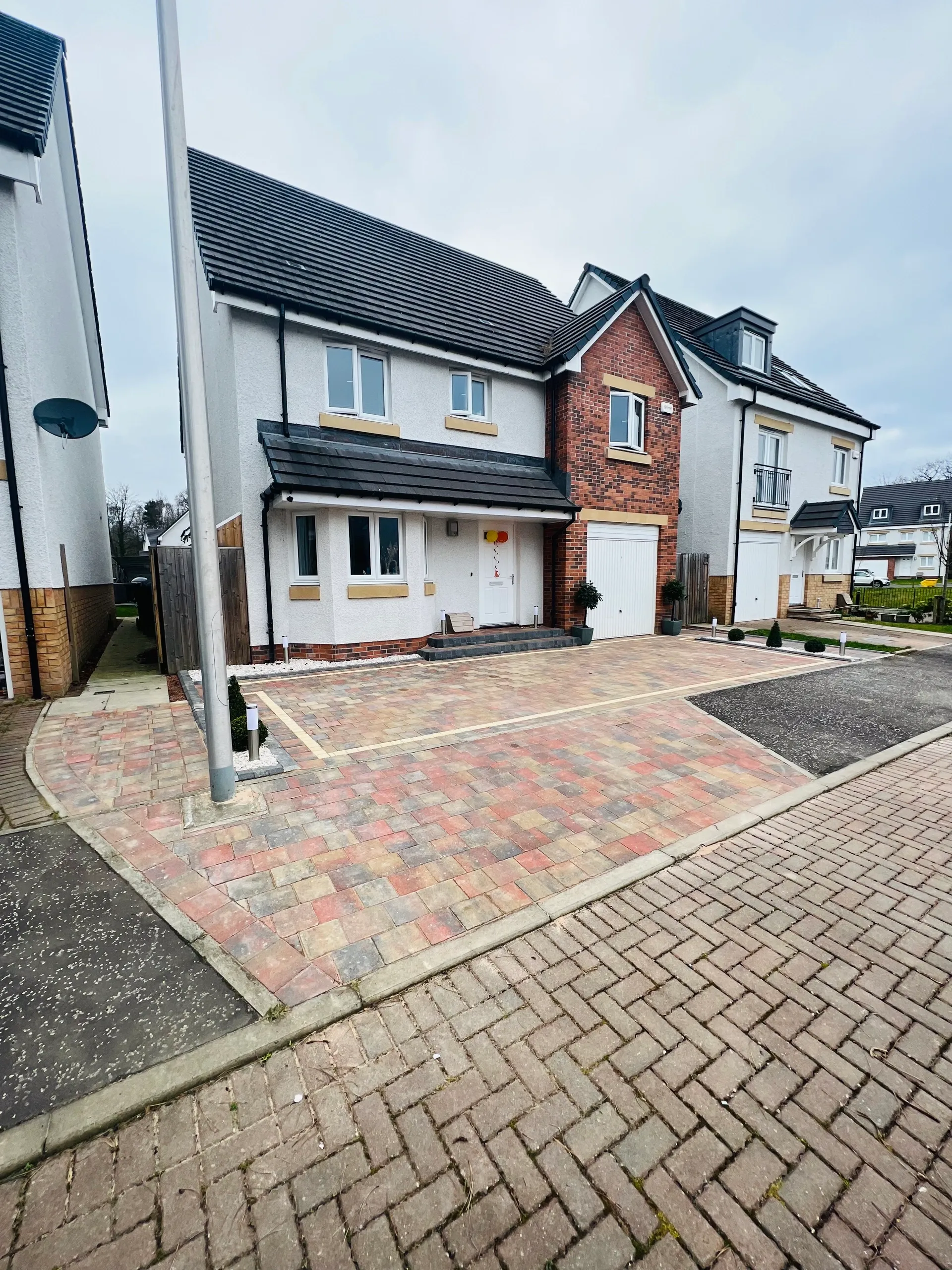
Block paving is one of the most popular driveway choices for UK homeowners, thanks to its durability, flexibility, and kerb appeal. However, without proper care, even the best block paving can lose its appearance and performance over time. Weeds, algae, staining, and sunken blocks are common issues that usually stem from poor or irregular maintenance rather than the material itself.
The good news is that block paving is relatively easy to maintain when the correct approach is taken. Regular cleaning and simple preventative measures can dramatically extend the lifespan of a driveway while keeping it looking smart year-round.
At Maybury Landscaping, we often see driveways that could have lasted decades longer with the right care. This guide explains how to clean and maintain block paving properly, avoiding common mistakes that can cause long-term damage.
1. Keeping the Surface Clear
Regular surface cleaning prevents dirt and organic matter from building up. Leaves, soil, and debris trap moisture, encouraging moss and algae growth, particularly in shaded areas.
Sweeping the driveway every few weeks is one of the simplest yet most effective maintenance steps. This removes debris before it breaks down and stains the surface. Occasional rinsing with clean water helps lift surface dirt without disturbing the jointing sand.
For most households, light cleaning throughout the year is far more effective than leaving the driveway untouched and attempting a deep clean later.
2. Dealing with Moss, Algae, and Weeds
Moss and algae are common on block paving, especially in damp or shaded locations. While they are not structurally damaging at first, they can make the driveway slippery and unsightly.
Targeted treatments are often more effective than aggressive cleaning. A suitable driveway cleaner or moss treatment can be applied to kill organic growth before it becomes established. Once dead, growth can be brushed away easily without excessive pressure.
Weeds should be removed promptly, ideally by treating the root rather than pulling the visible growth alone. Leaving weeds to mature allows roots to widen joints and displace sand, increasing the risk of block movement.
3. When and How to Do Pressure Washing Safely
Pressure washing is one of the most misunderstood aspects of cleaning and maintaining driveways. While it can be effective, incorrect use often causes more harm than good.
High pressure can strip jointing sand, loosen blocks, and expose the sub-base. This leads to instability and increases the likelihood of sinking or spreading. Pressure washing should only be used occasionally and with care.
A moderate pressure setting, combined with a fan nozzle rather than a narrow jet, reduces the risk of damage. The lance should be held at an angle rather than directly downward to avoid forcing water into the joints.
After pressure washing, it is essential to allow the driveway to dry completely and then reapply kiln-dried sand to restore joint stability.
4. Re-Sanding Joints to Protect the Structure
Re-sanding is one of the most important yet overlooked steps in block paving maintenance. Jointing sand locks the blocks together and prevents water ingress.
Once the surface is clean and dry, kiln-dried sand should be brushed into the joints until they are fully filled. This process may need repeating after a few days as sand settles.
Well-filled joints reduce weed growth, improve load distribution, and significantly extend the life of the driveway. Skipping this step is one of the main reasons block paving deteriorates prematurely.
5. Sealing Block Paving: Is It Worth It?
Sealing block paving is optional, but it can offer several benefits when done correctly. A quality sealant can enhance colour, reduce staining, slow weed growth, and make routine cleaning easier.
However, sealing should only be carried out once the driveway is fully clean, dry, and properly re-sanded. Sealing over poor preparation traps moisture and can cause patchy finishes or surface failure.
Professional advice is recommended before sealing, as not all driveways are suitable and incorrect application can create more problems than it solves.
When Professional Maintenance Makes Sense
While routine upkeep can be handled by homeowners, professional maintenance is beneficial when driveways show signs of wear, staining, or structural movement. Deep cleaning, re-levelling, and sealing are best carried out by experienced professionals who understand how block paving systems work.
Professional maintenance not only restores appearance but also prevents small issues from becoming costly repairs.
Need Help Maintaining Your Block Paving Driveway?
Regular care keeps block paving looking its best, but deep cleaning, re-sanding, and repairs are often best handled by professionals — especially when the driveway shows signs of wear, weeds, or movement.
If your block paving driveway needs a refresh or ongoing maintenance, expert attention can restore its appearance and protect it from long-term damage.
At Maybury Landscaping, we provide professional driveway cleaning and maintenance services designed to extend the life of your block paving and keep it looking smart year-round.
Get in touch today to arrange a driveway assessment and find out how proper maintenance can save you money on repairs in the long term.