Garden Design Ideas for Edinburgh Gardens (And What Actually Works Here)
If you have ever tried to copy a garden design from Pinterest or a glossy English gardening magazine straight into an Edinburgh back green, you will already know the problem. What looks effortless in a Surrey courtyard often struggles against Scottish wind, heavy clay soil and a growing season that is shorter than most of the UK enjoys.
At Maybury Landscaping, we design and build gardens across Edinburgh and the Lothians every week, from tenement back greens in Marchmont to sprawling plots out towards West Lothian. Below are nine garden design ideas that are proven to work here, not just in theory, but in the ground.
1. Design Around Edinburgh’s Wind, Not Against It
Edinburgh’s exposed position means many gardens deal with strong, salt-laden gusts, particularly anywhere near the Forth or on elevated sites like Corstorphine Hill or the Braids. Rather than fighting this with fragile planting, good garden design in Edinburgh works with it.
Structural hedging such as beech, hornbeam or native hawthorn creates a windbreak that also holds its shape through winter. Timber screening, slatted fencing and pergolas can be angled to filter wind rather than block it entirely, which reduces turbulence on the other side.
2. Choose Plants That Actually Thrive in Scottish Clay
A huge amount of Edinburgh sits on heavy clay soil, which drains slowly and can leave borders waterlogged through the wetter months. Rather than constantly amending soil to suit plants that were never meant for it, we design planting schemes around species that genuinely enjoy these conditions.
Hostas, astilbes, ferns and hardy geraniums all perform well in Edinburgh gardens. For structure, birch, rowan and Scots pine are reliable native choices that cope with both clay and colder snaps.
3. Make the Most of Short Summers with Year-Round Structure
Scottish summers are glorious but brief, so a garden that only looks good in July is a garden that disappoints for ten months of the year. Strong garden design in Edinburgh leans on evergreen structure, hard landscaping and seasonal interest that carries through autumn and winter.
Think ornamental grasses that catch low winter light, evergreen box or yew shaping, and stone or timber hard landscaping that looks intentional even with bare borders.
4. Front Garden Design That Suits Edinburgh’s Architecture
From Georgian New Town frontages to Victorian villas in Morningside and Grange, Edinburgh’s front gardens often need to respect the character of the property while still being practical. Common requests we get include low-maintenance planting, defined parking areas, and boundary treatments that meet conservation area guidelines.
Natural stone paving, in-keeping railings and structured planting beds tend to work best for period properties, while newer builds in areas like the Waterfront often suit a cleaner, more contemporary front garden design.
5. Small Garden Ideas for Edinburgh’s Tenement Back Greens
A large proportion of Edinburgh properties come with compact back greens, courtyards or tenement gardens. Clever garden design here is about making a small space feel bigger and more usable, not cramming it with features.
Vertical planting, raised beds, multi-purpose seating and clear sightlines from the kitchen window all help. Light-coloured paving or gravel can also lift a shaded, north-facing garden considerably.
6. Solve Drainage Before You Think About Planting
This is one of the most overlooked steps in garden design, and it is the one that causes the most problems down the line. Edinburgh’s rainfall and clay soil combination means poor drainage is extremely common, leading to soggy lawns, sinking patios and unhappy plants.
A proper drainage plan, whether that is a soakaway, French drain or simply regrading the ground, should always come before paving or planting decisions are finalised.
7. Bring in Hard Landscaping That Handles Scottish Weather
Patios, paths and driveways in Edinburgh need to cope with frost, heavy rain and the occasional heatwave. Not every material is up to the job. Porcelain paving, natural stone and properly laid block paving with correct falls and drainage all perform well here, while some budget materials can crack or lift after a hard winter.
8. Create a Garden That Works for Edinburgh’s Indoor Outdoor Lifestyle
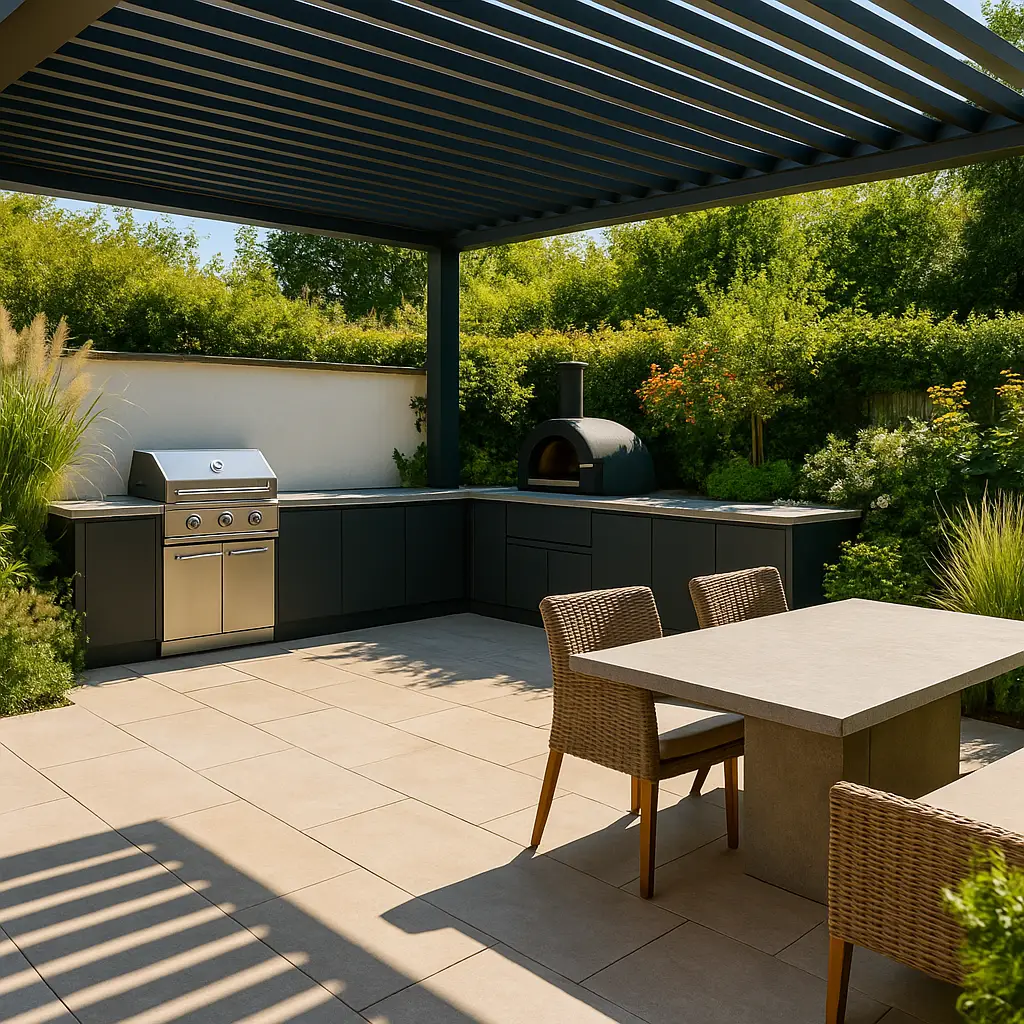
Even with our climate, more Edinburgh homeowners are asking for gardens that extend their living space, particularly since more people are working from home. Covered seating areas, garden rooms, outdoor kitchens and fire pits are all increasingly popular across the city, from Leith to the suburbs.
9. Work with a Landscaper Who Knows Edinburgh’s Conditions
Perhaps the most important point on this list. A garden designed without local knowledge of Edinburgh’s soil, wind exposure, planning requirements and microclimates is a garden that is more likely to need costly fixes within a few years.
Frequently Asked Questions
What is the best garden design for a small Edinburgh back green? Vertical planting, raised beds and light-toned paving tend to work best, as they make compact spaces feel larger while coping with shade and Edinburgh’s typically damp soil conditions.
Do I need planning permission for garden landscaping in Edinburgh? Most garden landscaping does not require planning permission, though listed buildings and conservation areas, which cover large parts of Edinburgh, can have additional restrictions on boundary walls, hard surfacing and front garden changes.
What plants grow well in Edinburgh gardens? Hardy, wind-tolerant and clay-loving plants such as hostas, ferns, astilbes, birch and Scots pine consistently perform well across Edinburgh gardens.
How much does garden landscaping cost in Edinburgh? Costs vary widely depending on garden size, drainage needs and materials, but a considered garden design at the outset typically saves money by avoiding drainage or planting failures later on.
Ready to Redesign Your Edinburgh Garden?
Maybury Landscaping designs and builds gardens across Edinburgh and the Lothians that are built to handle our climate and look good in every season, not just July. Get in touch for a free consultation and let us help you plan a garden that actually works where you live.