It probably won’t surprise you to hear that Maybury Landscaping create an outdoor space that’s practical, great to look at, and built to last. For some people, that might mean choosing a classic block-paved driveway. For others, it means going for a modern resin-bound surface with a sleek, seamless finish and minimal upkeep. But for more and more customers, there’s a new question creeping into the conversation: is a resin-bound driveway actually good for the environment?
We get it. It’s 2025, and sustainability matters. You want something that looks smart and performs well, but you don’t want to make choices that harm the planet. So, let’s take a proper look at resin-bound driveways—the good, the bad, and everything in between.
First, what is a resin-bound driveway?
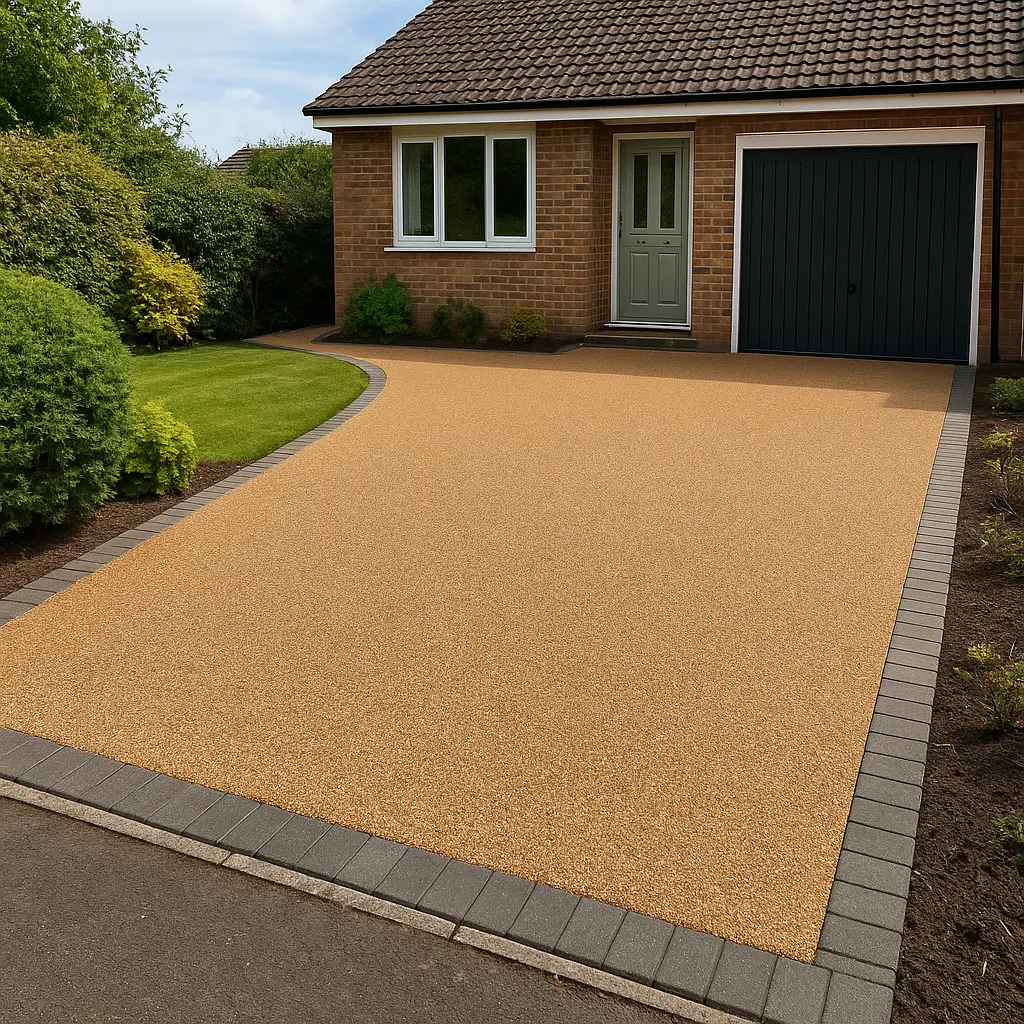
A resin-bound driveway is made by mixing a clear resin with natural stone aggregates, then applying it evenly over a specially prepared base. The result is a smooth, durable surface that can handle vehicle traffic, resist weeds, and stay looking sharp for years. The key feature and the thing that sets it apart from tarmac or concrete—is that it’s porous. That means rainwater drains through it naturally instead of running off into the street, which is great news for flood prevention and local drainage systems.
But let’s not sugarcoat it! Resin is a synthetic material, derived from petroleum. It’s not biodegradable, and once it’s cured, it doesn’t break down easily. That’s not ideal. As of now, most resin-bound systems on the market use what’s called “virgin” resin—meaning it’s made fresh, not recycled. So if you’re judging this option purely on the origin of its materials, it’s not the greenest choice out there. And if it’s installed badly—say, over a concrete base without proper drainage—you lose the permeability benefit entirely. It becomes just another hard surface that contributes to runoff, and that’s exactly what we’re trying to avoid.
That said, there’s another side to the story. In fact, quite a few reasons why resin-bound driveways are becoming a more eco-friendly option than they first appear.
For one, they last.
A properly installed resin-bound driveway can last 15 to 20 years or more, without the cracking and shifting you often see with block paving or the crumbling edges you get with old-school tarmac. That kind of durability means fewer repairs, fewer materials wasted, and fewer resources used in the long run. There’s also the maintenance factor. Once your resin-bound driveway is down, that’s it. No sealing, no weedkiller, no fertilisers, and no petrol-powered pressure washers every other weekend. Just an occasional clean, and you’re good to go.
And then there’s the drainage. Unlike concrete or tarmac, which are completely impermeable, a resin-bound surface lets water pass through, helping reduce localised flooding and easing the load on already strained drainage networks. In fact, most resin-bound driveways don’t require planning permission because they meet SuDS (Sustainable Drainage Systems) regulations. That’s a big plus in our book. Less paperwork, better outcomes.
Let’s not forget the materials.
While the resin is synthetic, the aggregates used in resin-bound driveways are usually natural stone—often quarried in the UK. That means fewer transport emissions and a lower carbon footprint than materials imported from overseas. Some systems even incorporate recycled stone or coloured glass, giving new life to old materials. And, as technology moves forward, manufacturers are starting to experiment with bio-based and single-polymer resins that are easier to recycle and cleaner to produce. It’s not mainstream yet—but it’s on the horizon.
Here’s what one of our recent clients had to say:
“We couldn’t be happier with the resin driveway Maybury installed. It looks incredible, and we were really impressed with how much thought they gave to drainage and sustainability. The whole process was smooth from start to finish.”
— Shannon H., Stenhouse, Edinburgh
So where does that leave us? Is a resin-bound driveway bad for the environment? Honestly… it depends on how you look at it. If you want a surface made entirely from recycled, biodegradable materials, this isn’t it. But if you’re looking for a long-lasting, low-maintenance option that reduces flooding, avoids chemical use, and relies on natural aggregates—it’s a very strong choice. As always, the key is quality. A well-installed resin-bound driveway performs beautifully and helps you avoid many of the downsides of traditional surfaces. A poorly installed one? Not so much.
At Maybury Landscaping, we specialise in resin-bound driveways done right. That means using the proper porous sub-base, sourcing high-quality materials, and making sure every inch of the surface is finished to the highest standard. We work across Edinburgh, Alloa, Falkirk, Stirling, Dunfermline, and the surrounding areas, and we’re proud to deliver driveways that look amazing, perform flawlessly, and meet the environmental expectations of modern homeowners.
So if you’re weighing up your options and trying to choose a driveway that ticks all the boxes—practical, stylish, and sustainable—resin-bound could be exactly what you’re after.
👉 Click here to request a free quote
👉 Learn more about our driveway services
Let’s create a driveway that’s built to last and built for the future.