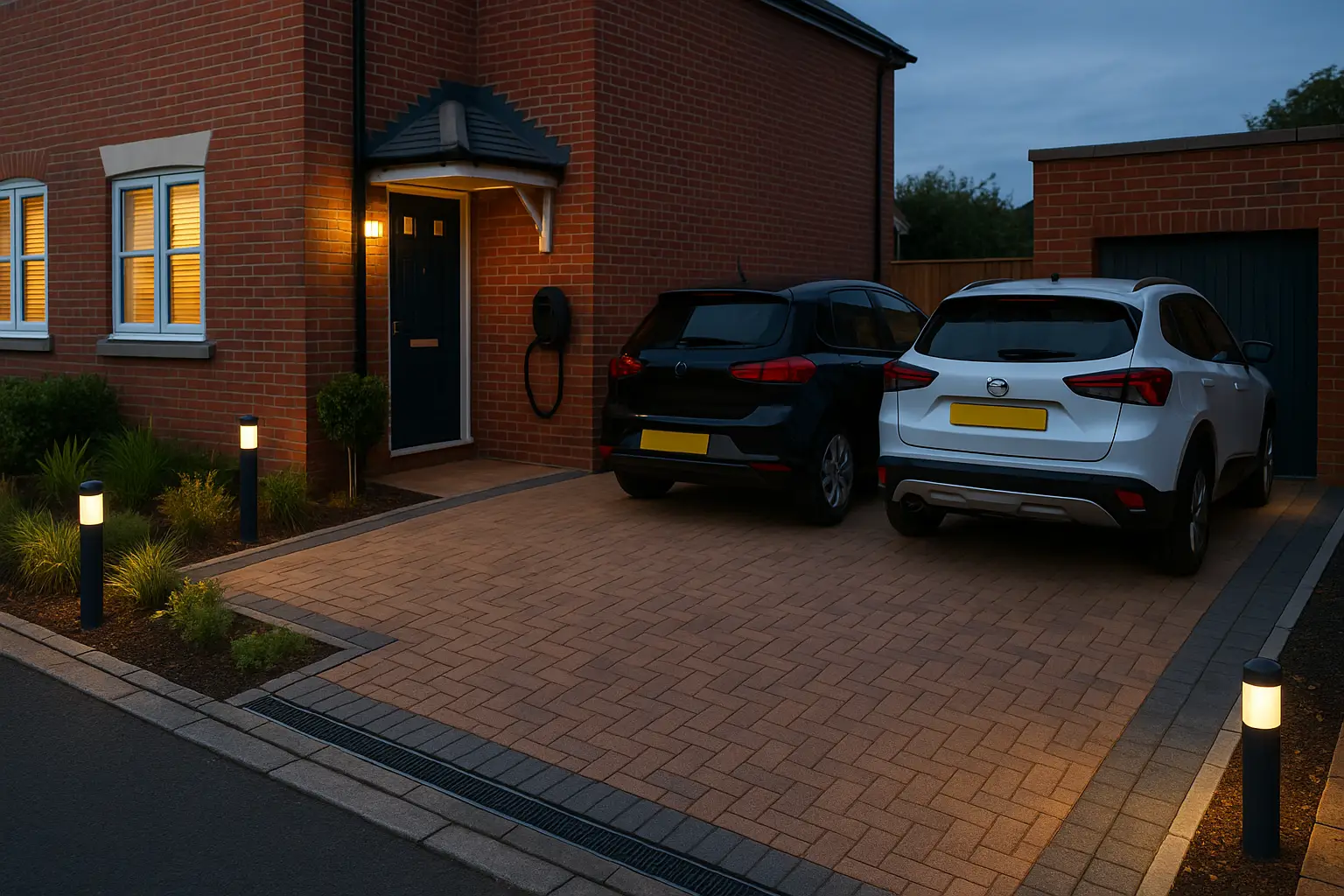
A well-designed driveway does more than give you somewhere to park. For many buyers it’s the very first signal of how a home has been looked after—an instant read on quality, practicality and pride. In competitive markets, the difference between a “serviceable” frontage and a considered, compliant, low-maintenance driveway can be thousands of pounds on the sale price and days shaved off time-to-offer. Here’s what today’s buyers are really scanning for when they pull up outside, and how to design a driveway that lifts value rather than just filling space.
Intentional Kerb Appeal
First impressions begin at the pavement. Buyers notice whether the surface and edging suit the house style, whether colours complement brick and render, and whether planting has been used to soften the hardstanding. Premium materials, like resin-bound aggregates, well-laid block paving, or tidy, machine-laid tarmac detailed with granite setts, signal care and longevity. Faded, stained or patchy surfaces do the opposite. A neat border, crisp edge restraints, and a simple, coherent palette make a driveway feel like part of the architecture rather than an afterthought, which reassures buyers that the rest of the property has been treated the same way.
Modern Capacity and Layout
Most families want to park two vehicles without playing musical cars. It means planning for a comfortable width—often 5.5–6.0 metres for side-by-side parking—with around 4.8–5.0 metres of length per car. If your plot is tight, clever geometry helps: a splayed entry to ease access, slightly staggered bays, or a single-width drive with a localised “passing bulge” near the kerb. Buyers also clock how easy it is to open doors, unload prams and shopping, and walk to the front door without brushing hedges or wing mirrors. A clear pedestrian strip of roughly 0.9–1.2 metres from kerb to threshold reads as comfort and safety—two things people happily pay for.
Surveyors See Drainage and Compliance
In England, front-garden driveways are typically permitted development if the surface is permeable or rainwater drains to a porous area within your boundary. Even buyers who haven’t read the small print have learned to ask about puddling, damp, and whether water runs away from the house. Surveyors will, too. Designing positive falls away from the threshold, adding discreet channel drains where needed, and keeping the finished surface at least 150 mm below the damp-proof course are small decisions that prevent big problems. A SuDS-aware approach—permeable resin-bound, permeable block systems over open-graded sub-bases, or a simple rain garden—calms concerns before they arise and reads as “future-proof”.
Long-Lasting Materials
The surface you choose communicates the likely maintenance and durability to a buyer. Resin-bound offers a crisp, contemporary look and, when laid over the right base, can be permeable with low day-to-day upkeep—ideal for households with prams, scooters and bikes. Block paving brings classic style and the practical advantage of lift-and-relay repairs or access to services; herringbone patterns excel where cars turn frequently. Tarmac remains a strong option for larger areas and heavier vehicles; detailed with kerbs and borders, it looks smart and is quick to install. Stabilised gravel in geocells can maintain a green feel on secondary bays while keeping ruts at bay. Whichever route you choose, buyers favour systems with credible warranties and visible build quality at the edges, manhole covers and thresholds.
EV-Ready Driveways
Electric vehicle ownership is rising, and even buyers without an EV now think ahead. A neat, wall-mounted charger positioned to avoid blocking doors, a subtle cable channel across the path, and sufficient parking depth to plug in without awkward manoeuvres are small details that make a home feel ready for the next decade. When an agent can say, “It’s EV-ready—there’s a tidy charge point and a cable route,” buyers put mental ticks in the “future-proof” column.
Lighting and Security
Good lighting sells comfort as much as it sells security. Buyers like low-glare bollards along edges, step lights at thresholds, and a sensor-controlled fitting near the door; they dislike floodlights that blind you on approach. Well-placed lights define boundaries at night, reduce trip risks, and subtly make the space feel premium. If you’ve installed a video doorbell or camera, ensure it’s positioned discreetly and doesn’t fight the facade—people should feel welcomed, not watched.
Good-Looking Gardens
A driveway that keeps some garden reads as more valuable than a sea of hardstanding. Slim planting beds of 600–900 mm along one edge, evergreen structure with seasonal colour, and low-maintenance species that don’t shed tyres’ worth of debris keep the frontage calm and tidy. Rain-garden planting in a shallow swale doubles as drainage management. Where plots are narrow, vertical interest—pleached trees, a clipped hedge, or climbers on trellis—adds privacy without stealing width. A buyer imagines their life here; planting makes that picture warmer.
Craftsmanship
Edges, joints and interfaces are where cheap work shows. Buyers will notice whether kerbs are straight and well anchored, whether a manhole has been replaced with an inset cover, whether joints are tight and level, and whether thresholds meet the path cleanly without awkward ramps. Even the way the drive meets the pavement—aligned to a dropped kerb, no cracked public edging—affects perceived quality. These details are inexpensive compared to the surface area itself, but they compound in a buyer’s mind into “this feels well built”.
Maintenance Story
People don’t just buy a surface; they buy the maintenance routine that comes with it. Be ready with a clear, honest story: how to clean it, how often to re-sand or seal blocks, what to avoid on resin (heavy oil and harsh solvents), and how to keep gullies and channels clear. If you can hand over a simple care sheet and warranties, you reduce friction in the negotiation. A drive that promises to stay good-looking with reasonable effort is a drive that supports your asking price.
Where Value Is Won—and Lost
Value rises when a driveway solves three buyer anxieties at once: “Is there enough parking?”, “Will it drain and last?”, and “Does it make the house look better?” It falls when the layout forces awkward manoeuvres, water sits where it shouldn’t, or the surface looks tired and patch-repaired. Over-paving can also hurt value by making a home feel harsh; leaving a modest but intentional amount of green space often does more for price than squeezing an extra half-bay you’ll rarely use. The strongest returns typically come from replacing dated, failing surfaces with a compliant system that increases practical parking to two cars, integrates good lighting and an EV charger, and pairs hardstanding with tidy, low-maintenance planting.
A Simple Path to a Value-Adding Drive
If you’re planning with resale in mind, walk the buyer’s journey. Arrive at the kerb and ask: do I immediately understand where to park and where to walk? Is there room to open doors comfortably? Do levels and edges feel correct and safe? Does the surface reflect the house style? Then step back and check compliance and longevity: are falls correct, is the system permeable or properly drained, and are thresholds protected? When these answers are “yes”, your driveway won’t just look the part—it will actively support your valuation, reduce survey snags, and help buyers decide faster.
Thinking about upgrading your driveway?
Maybury Landscaping design and install driveways that lift kerb appeal, satisfy surveyors, and make everyday living easier—without paving over your garden. Inquire with us today!