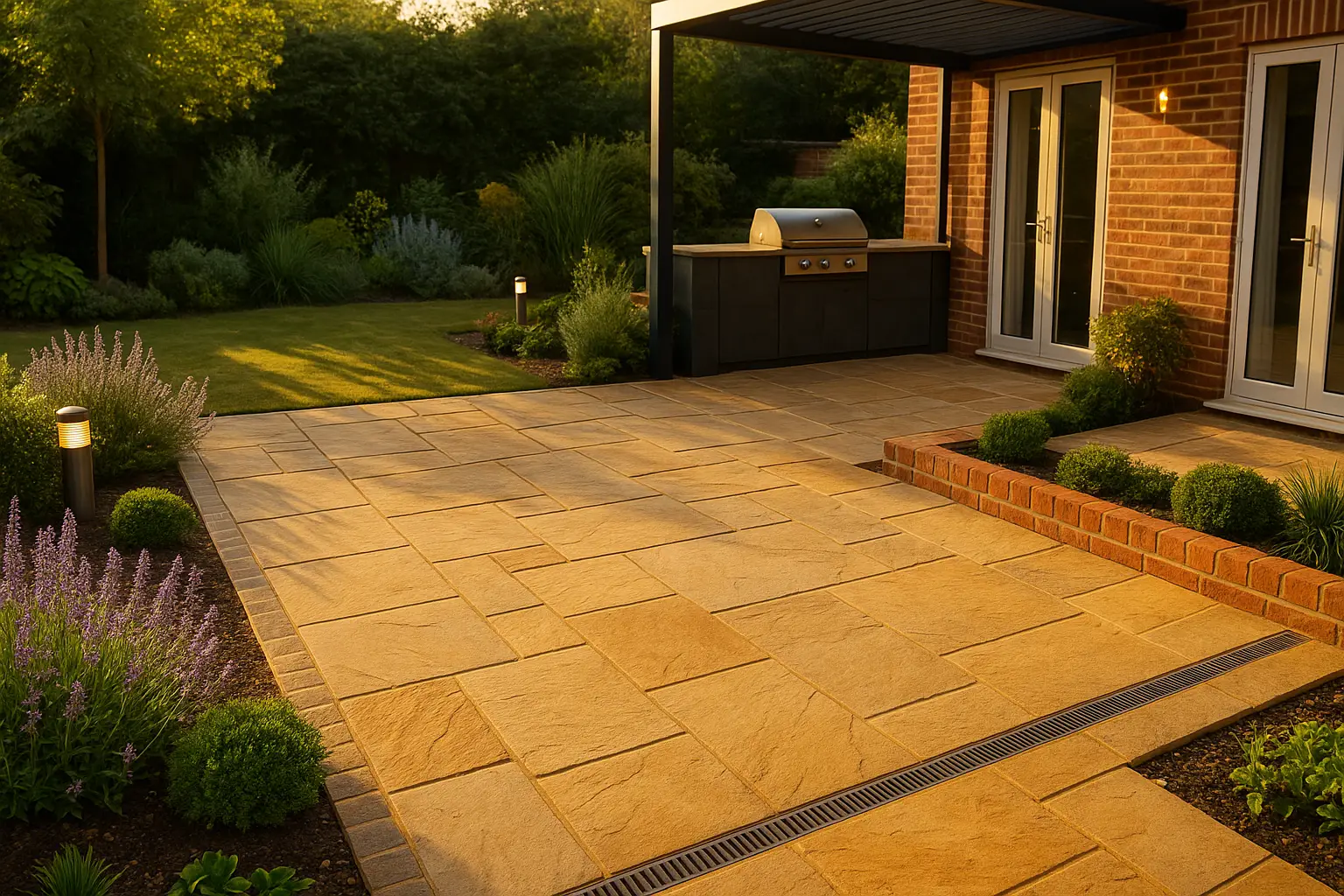
A natural stone patio brings character the moment it is laid. Each slab carries unique tone and texture, so the terrace feels established rather than new. Stone stands up to real weather, partners well with planting, and looks right beside brick, timber and render. If you want an outdoor space that ages gracefully and invites you outside more often, stone is a strong foundation.
Choose the stone that suits your home
- Sandstone offers warm, varied shades and subtle riven texture. It suits cottage gardens and traditional brick homes.
- Limestone reads calmer and more contemporary, with tighter grain and cooler tones that flatter modern extensions.
- Granite is dense and speckled, very hard wearing, excellent for busy routes and dining areas.
- Slate gives rich colour and layered texture, perfect for smaller patios and courtyards.
Bring samples outside and check them at different times of day. Look at them in sun, shade and after rain. Your eyes will tell you quickly which stone belongs.
Get the finish and grip right
Texture is not just a look. It is your safety net in wet weather. Lightly riven, shot-blasted or flamed finishes offer dependable grip while staying comfortable underfoot. Avoid polished surfaces outside. On steps, mark the nosing with a subtle colour change or a neat pencil line so edges read clearly at night.
Colour stories
Stone loves company. For a warm, relaxed palette, pair buff or golden sandstone with honey-toned timber and bronze accents. For a clean modern scheme, match cool grey limestone or granite with charcoal metalwork and mid-tone timber. If your façade mixes brick or stone, echo one of the lighter tones in the patio and repeat a darker tone in planters or edging so everything feels intentional.
Patterns
Pattern is more than decoration. It sets the mood and movement. Random length layouts feel relaxed for family terraces. Coursed patterns bring calm order beside contemporary buildings. Use stone setts as a border to frame the space and protect edges from scuffing. Herringbone setts at entrances add traction and a crafted detail. Where the patio meets lawn, a soldier course creates a clean transition.
Base, falls and joints
Great patios are quiet performers. They drain cleanly, stay level and resist frost. Start with a well compacted sub-base. Establish gentle falls away from the house so water moves to channels rather than pools at thresholds. Lay each slab on a full mortar bed for consistent support. Keep joint widths uniform and use a jointing compound or mortar that suits the stone. Include easy-to-clean silt baskets where channels collect debris. These details matter more than any catalogue photograph.
Door thresholds and access
Modern sliders sit low, which looks elegant but needs protection. A discreet linear drain in front of the door keeps interiors dry during heavy rain. Step down modestly from the threshold to the terrace so wind-driven water cannot track inside. On older properties with higher sills, keep the first course consistent, then use one or two gentle risers to reach the main level.
Zoning
Think in rooms rather than one big slab. Keep a cooking zone at the edge with safe clearances. Allow real prep and landing space if you plan a grill or plancha. Place dining where evening light falls and give chairs space to pull back without snagging planters. Locate lounge seating where winter sun reaches and wind is softer. When each zone has a job, the whole terrace feels effortless.
Planting
Stone frames foliage beautifully. Use evergreen structure for year-round shape. Weave in grasses for movement and seasonal colour for moments of joy. Herbs such as thyme and rosemary thrive beside warm stone and release scent when brushed. Leave small pockets between stones or along edges for creeping plants to spill and soften the geometry.
Lightings
Layered light beats a single bright flood. Use a focused task light by the grill. Add low markers along steps and routes to prevent trips without glare. Wash a feature wall or specimen tree to give depth. Warm white around 2700 to 3000 K flatters stone and makes food look appealing. Place controls where you can reach them without crossing the hot zone.
Shelter and gentle heat
A simple pergola or louvred roof stretches the season. Side screens placed to the windward side take the edge off breezes without trapping smoke. Choose discreet radiant heaters aimed at seating rather than big glowing units. The aim is comfort without clutter.
Maintenance
Natural stone is easy to live with when you keep to gentle habits. Sweep little and often to remove grit. Treat algae early in shaded corners. Use a pH-appropriate cleaner for your stone type and rinse thoroughly. Avoid harsh acids on limestone and slate. Repoint joints if they open so water does not creep under edges. Heavy jet washing should be rare and followed by joint repairs where needed.
A quick pre-build checklist
-
Stone choice, finish and slip rating confirmed
-
Sub-base depth, falls and drainage points agreed
-
Full-bed laying method and joint width specified
-
Threshold protection with linear drain detailed
-
Zones for cooking, dining and lounging marked out
-
Lighting circuits and power routes planned before paving
-
Maintenance plan and cleaning products selected
The takeaway
A natural stone patio can transform how you use your home. Choose a stone that suits your architecture, specify a finish with safe grip, and invest in structure and drainage that handle real weather. Zone the space for how you live, add planting that softens the lines, and light it so evenings feel easy. Do the fundamentals well and your patio will look beautiful on day one and still feel solid five winters from now.
Ready to plan your patio? Book a free site visit.