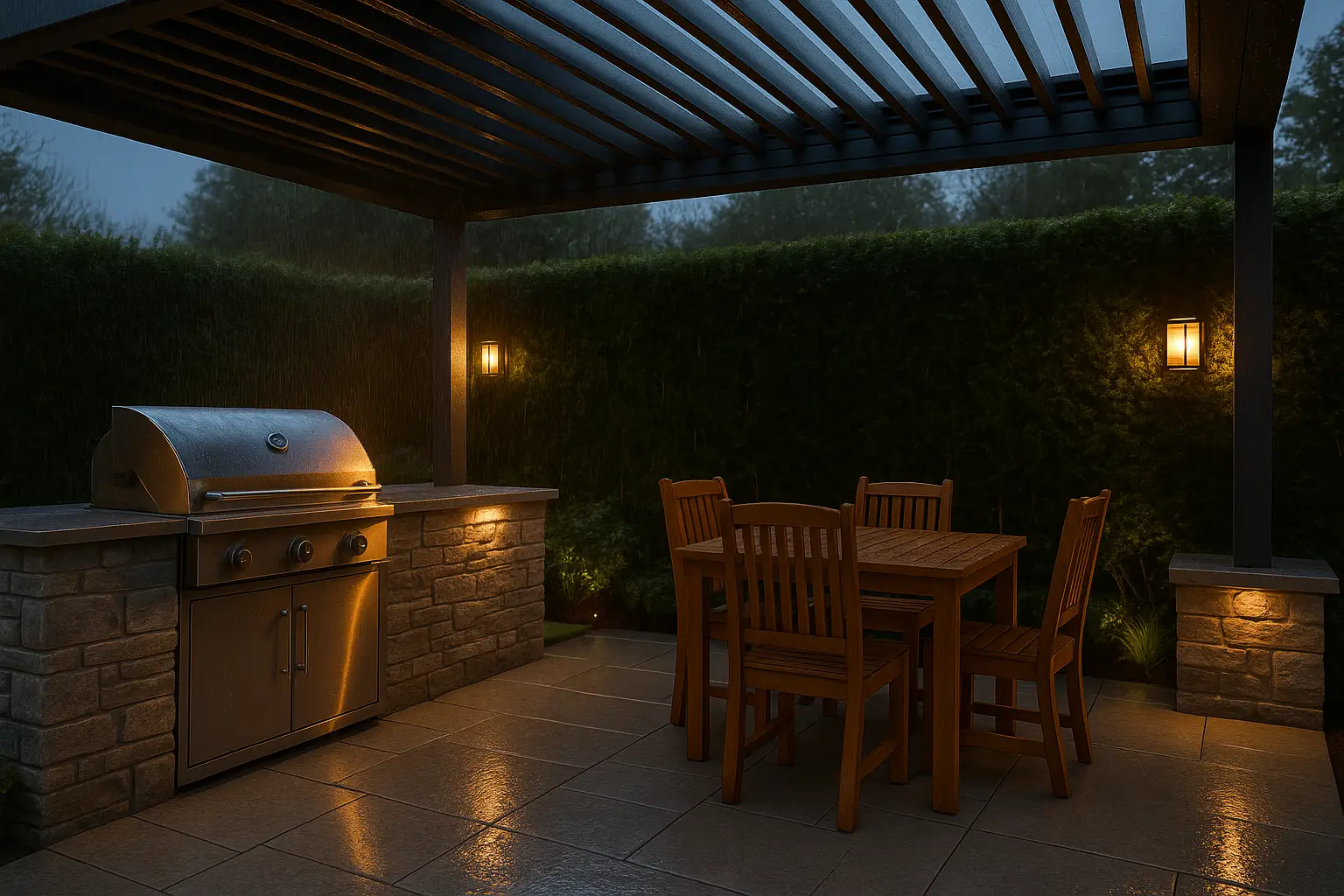
An outdoor kitchen that only works on still, sunny days is a missed opportunity. In the UK, wind, rain and cold snaps are part of the calendar, so the goal is to create a space that cooks well in July and still feels inviting in November. An all-weather approach looks at shelter, surfaces, services and seasonal care, so you can cook, dine and host with confidence for most of the year.
Start with the microclimate
Every garden has warmer and cooler spots, and places where wind funnels or rain lingers. Spend time outside at different hours and note sun paths, shade lines and prevailing wind. A south or south-west facing terrace often gives the longest window of light and warmth. If wind is an issue, position the kitchen where boundary walls, hedging or a pergola can break the breeze without trapping smoke. Close to the house works well for access to power, water and storage, but allow enough separation to prevent cooking odours drifting indoors.
Create dependable shelter
Shelter is non-negotiable if you want year-round usability. A timber pergola with a louvered or polycarbonate roof keeps off showers while allowing ventilation. In exposed gardens, add side screens, slatted fencing or evergreen planting to tame crosswinds. Aim for a roof height that feels airy while keeping rain off worktops. Ensure that any structure is anchored to suitable foundations and that fixings are corrosion-resistant.
Choose weather-proof materials
Worktops and cladding take the brunt of British weather. Porcelain paving and sintered stone worktops are excellent because they are non-porous, stain-resistant and frost-proof. High quality stainless steel performs well for appliances and doors when specified for outdoor use. If you prefer timber accents, choose durable species such as oak or thermally modified ash and keep them sealed. For paving, opt for non-slip finishes and grouts that are rated for freeze-thaw cycles. Avoid soft stones that absorb grease and water.
Plan safe services from day one
An all-weather kitchen needs reliable utilities. Water supply and waste must be correctly installed, insulated and protected from frost. Electrical circuits should be outdoor rated with RCD protection and installed by a qualified electrician. For gas, use a Gas Safe professional and confirm clearances for grills, hobs and heaters. Build in shut-off points that are easy to reach and label them clearly.
Manage drainage and surface falls
Rain will find every weakness, so plan gradients that move water away from the cooking area without creating trip points. A gentle fall of around 1 to 2 percent is usually enough. Linear drains at the edge of work zones keep feet dry and reduce splash. If you include a sink, direct greywater to an approved drain, never to planting beds. Keep gullies accessible for cleaning.
Pick appliances that suit the climate
Gas grills light reliably in damp weather, while ceramic kamado cookers hold heat through long, cold evenings. If you want a pizza oven, consider insulated models that reach temperature faster and waste less fuel. Outdoor fridges should be rated for fluctuating temperatures and protected from direct sun and rain. Closed storage for utensils and crockery keeps everything clean between uses.
Add heat where it counts
Thermal comfort is the difference between a five-month and a ten-month kitchen. Combine overhead heaters with a fire pit or low-level radiant units positioned to warm seating rather than the open air. Check manufacturer clearances around combustible materials. Simple wind blocks, heavy throws and seat cushions extend comfort without large energy costs.
Light it for cooking and mood
Layered lighting makes the space practical and atmospheric. Use bright, focused light over worktops and the grill, then softer wall or post lights for pathways and dining. Warm colour temperatures feel welcoming in cold months. All fittings should be IP rated for outdoors, with switches placed where you can reach them without crossing the cooking zone.
Design storage for all seasons
Closed, ventilated cupboards keep tools, spices and fuel in good condition. Allocate a dry, mouse-proof space for charcoal or wood. Add a weather-tight drawer for cushions and throws near the dining area. If space allows, a small indoor-outdoor pantry cupboard by the back door reduces journeys in heavy rain.
Think smoke and neighbour comfort
In close urban streets, consider how smoke drifts. Position the grill so fumes travel up and away from seating and neighbouring windows. Simple baffle walls, tall planting and careful orientation help. Mechanical extraction is rarely necessary outdoors, but a canopy can capture heat and rain while guiding smoke upward into free air.
Winter care and frost protection
All-weather does not mean zero maintenance. As temperatures drop, isolate and drain water lines to prevent burst pipes. Cover or remove soft furnishings. Clean and season metal surfaces so they resist corrosion. Keep porcelain and grout clean to prevent algae, which can be slippery. A quick monthly check through winter keeps spring work to a minimum.
Budgeting and phasing the build
If the full specification is not in budget, phase the project. Start with a properly laid, non-slip porcelain terrace with drainage and conduits for future services. Add a pergola next, then the core grill and worktop, and finally appliances and heating. Phasing avoids ripping up finished work later and keeps the space functional at each stage.
Safety and compliance
Open flames, hot surfaces and electrics deserve clear rules. Maintain manufacturer clearances from structures, store fuel safely and keep a rated extinguisher within reach. Surfaces should be stable underfoot in wet conditions. If you plan a large roof, high walls or major plumbing and electrical runs, speak with qualified professionals. Local rules can vary, and professional sign-off protects your investment.
Sustainability that pays back
Choose efficient gas grills or insulated ovens to reduce fuel use. Select FSC timber and recycled or low-porosity surfaces that last longer and need fewer chemicals to maintain. Harvested rainwater is useful for planting around the kitchen, though not for sinks. LED lighting and controls that dim or switch off automatically cut energy use without sacrificing atmosphere.
A simple year-round routine
Success comes from small habits. Keep a weather cover for the grill that is quick to fit. Store dry logs or charcoal in sealed bins. Wipe and dry worktops after heavy rain. Keep a box of winter-friendly essentials near the back door, such as matches, blankets and a torch. When everything is easy to reach, you will use the kitchen more often.
Ready to cook year-round?
An all-weather outdoor kitchen is a blend of smart siting, robust materials and thoughtful services, finished with shelter, heat and light that make the space comfortable in real conditions. With the right plan you can cook and gather for most of the year, adding value to your home and making your garden the best room in the house.
Book a free site survey and design consultation with Maybury Landscaping today.