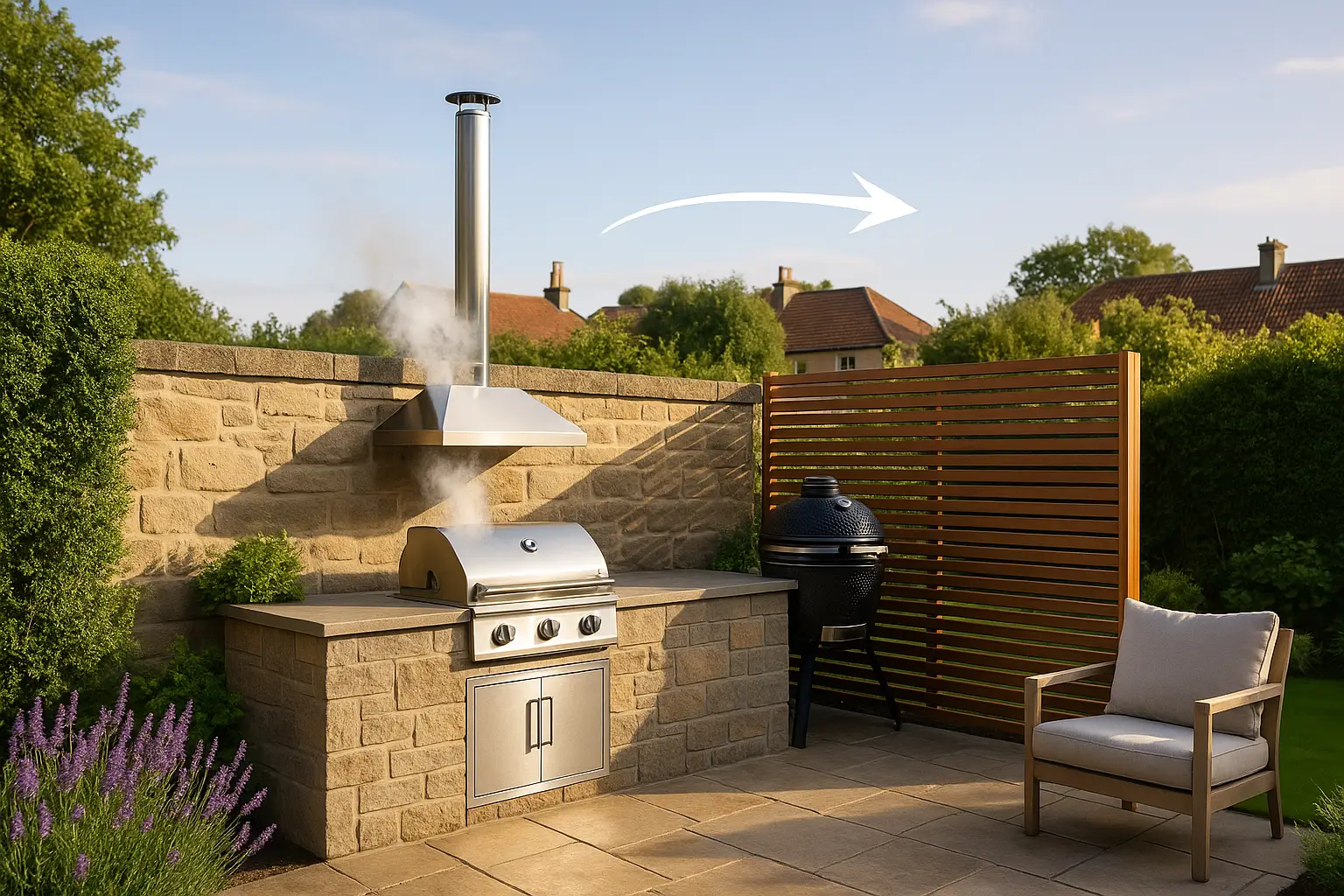
Great food should be the only thing guests remember. Uncontrolled smoke can sting eyes, drift into the house, and irritate neighbours. Greasy vapour can also stain worktops and pergolas. Odour and smoke management is part placement, part technique, and part maintenance. Get all three working together and you will cook with confidence in every season.
Study your site and the wind
Spend a few evenings outside to learn how air moves across your garden. Note where breezes funnel between buildings or hedges. Aim to place the grill so prevailing winds carry smoke away from doors, seating and neighbouring windows. A slight quarter turn often makes a big difference. Keep at least a few metres between the grill and frequently opened doors or tilt-and-turn windows.
Layout that steers smoke away from people
Plan the hot zone on the edge of your terrace, not in the middle. Seat guests upwind or crosswind of the grill. Avoid locating the grill under a low, solid roof that traps heat and smoke. If you are building a pergola, choose adjustable louvres or leave a clear path for air to rise. A taller rear wall behind the grill can help lift smoke upward rather than letting it wash across the dining table.
Using natural windbreaks
Planting and screens can slow wind without blocking airflow completely. Slatted fencing, espalier trees and dense hedging act as gentle baffles. Avoid wrapping the kitchen on all sides. You want a balance that protects the chef while still giving smoke an escape route.
Choosing fuel and appliances
Gas grills give instant control and produce cleaner smoke than damp charcoal. Quality charcoal or briquettes that are fully lit before cooking reduce acrid start-up fumes. Ceramic kamado cookers hold steady temperatures with minimal smoke once settled. Pizza ovens and fire pits should have chimneys or flues that carry smoke up and away from faces.
Techniques that keep vapour down
-
Preheat properly so food sears without sticking.
-
Trim excess fat and use drip trays to catch renderings.
-
Cook with the lid closed whenever possible. This concentrates heat and directs smoke upward.
-
Manage flare-ups by moving food to a cooler zone rather than dousing with water.
-
Use high smoke point oils for marinades and wipe off excess to reduce burning.
-
Add smoking wood sparingly. A little goes a long way in a small garden.
Consider mechanical extraction
Outdoor-rated hoods can be useful on covered kitchens. Choose models with a deep canopy, baffle filters and a capture area wider than the grill. Duct vertically to open air rather than across the seating area. All electrics should be installed by a qualified professional and the hood should have simple, grease-friendly maintenance access. In many gardens a hood is optional if placement and technique are right. In tight urban spaces it can be the difference between enjoyable and antisocial.
Mind clearances and safety
Heat and smoke rise. Maintain manufacturer clearances to pergola beams, screens and any fabric shades. Avoid soft furnishings directly behind the grill. Keep an extinguisher or fire blanket within reach and store fuel safely. If you add heaters, position them so they do not bake grease-laden air onto structures.
Keep the grill clean
Grease and carbon build-up cause flare-ups and bitter smoke. Brush grates after every cook while they are warm. Empty drip trays before they overflow. Deep clean burners, flavour bars and baffles on a regular schedule. For kamados and pizza ovens, clear ash so airflow remains smooth and predictable. Clean surfaces under a pergola to prevent sticky films that trap odour.
Be a good neighbour
Let nearby households know when you are planning a long cook. Avoid very smoky fuels on still, humid evenings when smoke lingers low. Start early so odours are not drifting at bedtime. A polite heads-up and a share of the finished food keep relationships sweet.
Quick checklist
-
Site the grill where wind carries smoke away from doors and seating.
-
Use adjustable shelter that protects the chef without trapping fumes.
-
Control flare-ups with two-zone cooking and drip trays.
-
Keep lids closed and use only dry fuel.
-
Clean grates, trays and internals regularly.
-
Consider an outdoor-rated hood under a roofed structure.
-
Communicate with neighbours and time cooks considerately.
Breathe easy while you cook. Book a free site visit for smoke control advice and outdoor kitchen design with Maybury Landscaping.