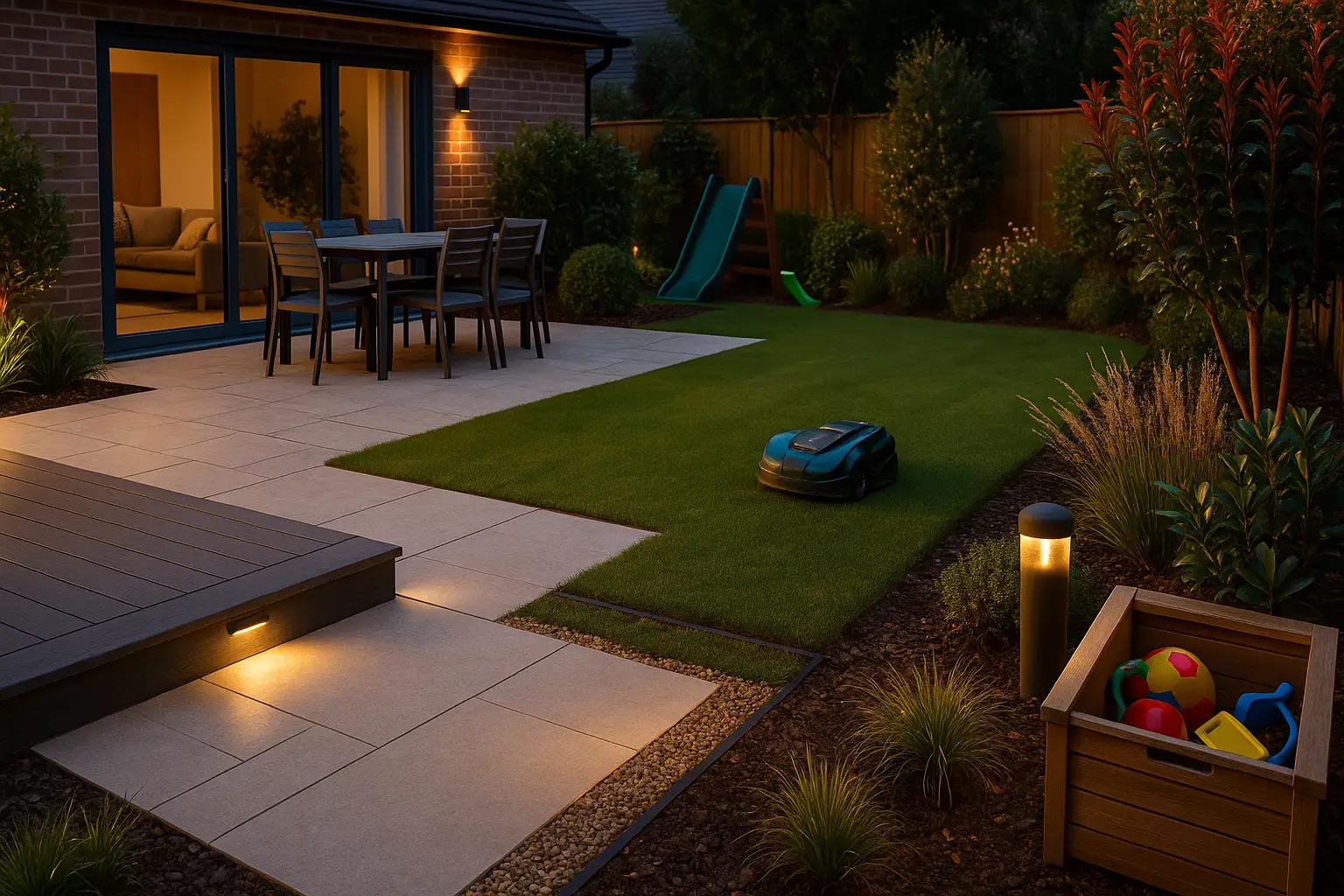
If your week is a blur of school runs, work and late dinners, the last thing you need is a garden that steals your weekends. Low-maintenance doesn’t mean lifeless; it means a space planned to look good, work hard and need only light, regular care. Here’s a practical, UK-focused guide to creating a family garden that stays tidy without constant upkeep.
What “low-maintenance” really means
A truly low-maintenance garden reduces the number of tasks, simplifies what remains and stretches the time between jobs. You’re aiming for fewer weeds, less mowing and easy cleaning, while keeping the space safe, usable and attractive all year. Think in terms of robust materials, sensible plant choices and a layout that naturally keeps mess under control.
Get the layout right first
Begin with clear, simple zones so wear and tear doesn’t spread everywhere. Keep routes obvious and direct so people naturally use paths rather than cutting across beds or the lawn. Fewer level changes means fewer edges to clean and fewer trip hazards; gentle slopes and wide, safe borders are easier to live with than lots of small steps. Plan tidy storage from day one—somewhere discrete for bins, cushions, toys and tools—because a garden that can be put away quickly is faster to maintain.
Choose hard surfaces that clean easily
Your paving sets the maintenance level for years. Porcelain slabs are the easiest long-term option: they’re dense, stain-resistant and shrug off algae, so a quick hose or occasional jet-wash keeps them fresh. For decks, capped composite boards avoid splinters and staining and don’t need yearly oiling. Use good jointing and solid edging so weeds can’t creep in at the margins. Where you want a softer feel, stabilised gravel in honeycomb grids or permeable pavers manage water well and resist rutting and mud.
Plant for structure and stamina
Build the planting around an evergreen backbone so the garden looks composed in winter without heavy pruning. Add reliable ornamental grasses for movement and long season interest; they’re cut back once a year and left alone the rest of the time. Choose drought-tolerant, pollinator-friendly perennials that don’t sulk if you skip a watering, and cover bare soil with living groundcover so weed seeds can’t get started. Repetition is your friend: a few well-chosen varieties repeated across larger beds are far easier than lots of tiny mixed borders.
Keep the lawn manageable (or change it)
Lawns look lovely but consume time. If you keep one, simplify its outline so you can mow in straight lines, and use steel or sett edging so you can mow right to the edge without strimming. Consider slow-growing or micro-clover blends for fewer cuts and better colour in dry spells. If budget allows, design the space for a robot mower with clear borders and a power point. Awkward slivers of grass that are hard to cut are best replaced with gravel, bark or planting so you stop battling tiny triangles of turf.
Prevent weeds before they appear
It’s faster to stop weeds than to pull them. Prepare soil well, then use a suitable membrane beneath gravel paths and a deep organic mulch on ornamental beds to block light and lock in moisture. Proper edging keeps lawn from creeping into borders, and dense planting shades out opportunists. Top up mulch once a year and most weeding becomes a quick patrol rather than a project.
Automate the watering
Consistent water keeps plants healthy with less fuss. A simple dripline under the mulch delivers moisture to roots with minimal evaporation and far fewer weeds. Pair it with a battery or smart timer and a rain sensor so it runs itself. A water butt on a downpipe gives you a free top-up during dry spells without dragging hoses around.
Make play areas easy to live with
Create an all-weather patch for play so the rest of the garden stays tidy—composite decking, rubber mulch or a small porcelain terrace works well. Use moveable goals or fold-away nets so you can reset the space in seconds. Soft, discrete barriers behind planting help rescue football-worn borders without building a fence around the fun.
Light and power that “just work”
Good lighting makes evenings welcoming without adding chores. Choose low-glare, warm fittings along paths and at steps, and put a sensor near the back door so you aren’t fumbling for switches. Fewer, better-placed luminaires mean less to clean and replace. Add outdoor sockets where you’ll actually need them—for a robot mower, pressure washer or festive lights—so you’re not trailing cables from the kitchen.
A realistic 1-hour-a-week routine
Design with a short weekly reset in mind. Most families can keep things in shape with a quick sweep or blow of hard surfaces, a once-monthly tidy of mulch and straggly stems, and seasonal jobs like an autumn leaf clear, a late-winter cut-back for grasses and perennials, and an occasional rinse of porcelain or composite. Because the layout and materials are doing most of the work, you’re maintaining the whole garden in light touches rather than tackling big bursts.
Budget paths that still look great
If funds are tight, start by simplifying the lawn shape, installing neat edging and creating one generous bed with evergreen structure, a few repeat grasses and a drip hose under mulch. Step up from there with a small composite deck or porcelain terrace, a robot-friendly lawn and simple automation. A full “best” scheme layers those elements with permeable paths, warm, low-glare lighting and a curated evergreen and grass palette—plus hidden storage so everything can disappear at day’s end.
Design it once and enjoy it for years. With a clear plan, robust materials and the right plants, a family garden can be beautiful, practical and genuinely low-maintenance—leaving your weekends free for the people who use it.