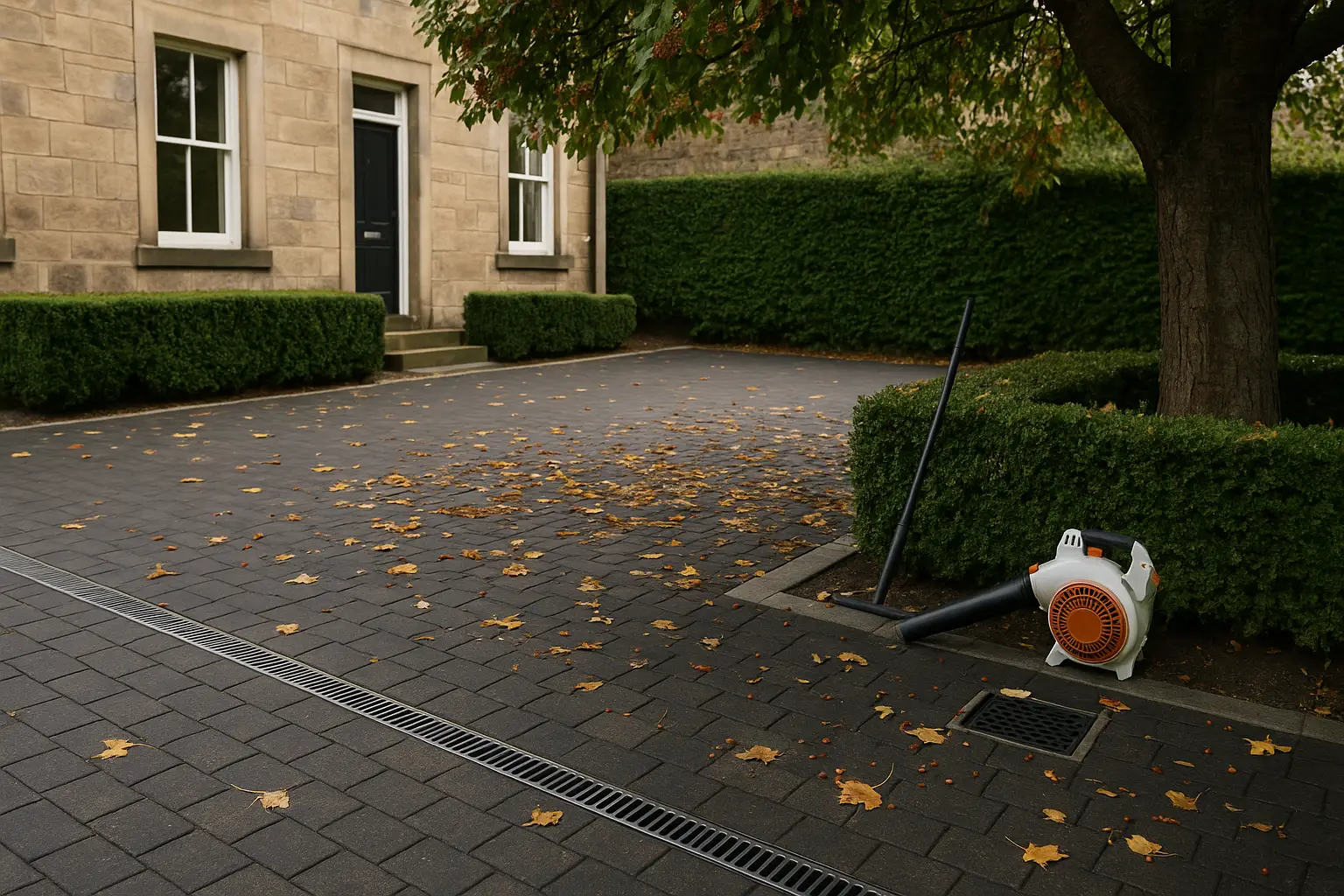
If you adore the character of mature trees but dread the stains, leaves and unevenness they can bring, the right driveway specification will let you have both: a green outlook and a surface that stays tidy, safe and easy to live with. In Edinburgh, where shade, blossom and autumn leaf-fall are part of the charm, the best driveways are those that hide organic marks, drain predictably and can cope with roots over time without constant patching. Below is a practical, longer guide to materials, build-ups and details that genuinely work when trees are close to the parking area.
Understand the Real Problems Trees Create
Messy trees create four predictable challenges: staining from tannins, berries and sap; debris accumulation that clogs drains and joints; persistent shade that slows drying and encourages algae; and root movement that can lift a poorly built surface. The solution is not one “magic” material but a joined-up design that tackles each issue. That means choosing a finish and colour that disguise marks, a base that respects or bypasses roots, drainage details that tolerate leaves, and a maintenance routine you will actually follow.
Working Within a Root Protection Area (No-Dig Done Properly)
If the new driveway sits within the tree’s Root Protection Area or the tree is protected by a TPO, excavation is often off the table. In those cases, a “no-dig” system is the gold standard. We lay a geotextile over the existing ground, then install a cellular confinement layer (a robust plastic honeycomb) and fill it with clean angular stone. The cells spread the vehicle load so we can surface above the soil with minimal disturbance to roots. Over the top, you can finish with resin-bound or with washed gravel contained in stabilising grids. The feel underfoot is firm and the structure breathes, which trees like. The crucial point is to keep finished levels and falls correct so water doesn’t sit under shade and feed algae.
Resin-Bound Near Trees: Smooth, Permeable and Tidy
When clients ask for a clean, modern look that is still tree-friendly, resin-bound over a stable base is often our first suggestion. The surface is smooth, permeable and easy to sweep, with no loose stones migrating into the house. In Edinburgh’s climate, we prefer aliphatic (UV-stable) binders and a mottled mid-dark blend of aggregates that hides leaf tannins and the odd berry that escapes the rake. Around drip lines we set discreet slot drains or a shallow channel so run-off has somewhere to go after heavy rain. Resin is not “no-maintenance” — nothing is under heavy trees — but an annual professional clean and periodic vacuum de-silt keeps it looking sharp for years. If the driveway sits inside a protected root zone, we pair resin with the no-dig cellular base described above so the tree and the surface both thrive.
Block Paving: Repairable, Good-Looking and Practical
If you prefer a more traditional finish, block paving is a dependable choice because it is modular and repairable. Should a root lift a small area in years to come, we can lift, adjust the bedding and relay without scars. The trick near trees is to specify a robust sub-base, strong edge restraints and colours that disguise marks — mid to dark blends, or variegated tones, make leaf stains and light sap much less obvious than pale creams. In shaded drives we choose lightly textured blocks for grip and, where permeability is not required, we often use high-performance resin or slurry jointing to resist wash-out and weeds. Where a truly permeable construction is needed, we use open-graded stone layers and graded jointing grit, but we also plan access for periodic vacuum maintenance because heavy leaf fall will eventually clog any permeable system if it isn’t cleaned.
Asphalt: Low-Fuss Appearance With Caveats
Asphalt’s dark colour shrugs off tannins and sap better than most surfaces and is quick to sweep after leaf-drop. It is also straightforward to patch, although patches are visible. The trade-off is flexibility: active roots can ridge the surface over time, and in deep shade the binder film can host algae unless you clean it gently each year. Where clients want the lowest-visual-maintenance look and accept occasional re-rolling or patching, asphalt with strong kerb edges and leaf-tolerant drainage remains a sensible, budget-friendly option.
Gravel in Stabilising Grids: Breathable and Root-Kind
Gravel contained within stabilising grids is surprisingly civilised under wheels and shoes, and it is the most tree-sympathetic option because it is entirely permeable and places minimal load on roots. We use angular gravels that interlock and specify a neat kerb to keep the stones where they belong. The honest drawback is housekeeping: leaves and needles mix into the gravel, and while a powered blower helps, you will do more raking than with resin or block. For cottages and conservation streets it is beautiful, but set expectations on maintenance.
Concretes (Including Pattern-Imprinted)
Concrete has few joints, so it collects less debris, but it is the most unforgiving material if roots move. Even with reinforcement, a lifting root can crack panels and repairs rarely blend perfectly. Stains are also more visible on pale slabs. We only recommend concrete near mature trees where the risk of root lift is demonstrably low or where clients are happy to accept cracking as a future possibility.
Details to Consider
1. Drainage
Whatever surface you choose, drainage needs to be designed for leaves. Slot drains with removable tops are easier to rake clear than wide open channels that trap detritus. Catch pits with baskets placed at low points let you lift out silt and seeds in minutes. We design gentle but positive falls away from the house and keep thresholds clean, with discrete slot drains at doors where needed. Good drainage shortens drying times, which in turn reduces algae in shaded areas.
2. Colour, Texture and Slip Resistance
Shaded drives demand finishes that stay grippy when damp and that do not show every leaf mark. Lightly textured porcelains (for paths), textured blocks and resin with a micro-texture all help underfoot. Colour choice matters more than most people realise: very pale surfaces look marvellous on day one and then announce every autumn leaf; very dark surfaces hide stains brilliantly but can highlight dust and pollen in spring. A mid-dark, variegated palette is the sweet spot for most tree-heavy plots in Edinburgh.
3. Root Management
Healthy trees are an asset and, legally, some are protected. Before you even think about pruning or cutting roots, check for Tree Preservation Orders and speak to an arborist. Our design approach is to avoid roots rather than fight them: no-dig where necessary, sympathetic levels that do not suffocate the root flare, and breathable constructions that keep oxygen moving through the soil. If a specific root crosses a proposed edge, we can often bridge it or adjust the line so the tree and driveway coexist without drama.
4. Gardens
A tidy edge makes a world of difference near trees. We often specify bullnose kerbs or sett edges that hold mulch back, create a crisp mowing strip and prevent bark or soil washing onto the drive in heavy rain. In the garden beds themselves, robust, non-toxic shrubs that tolerate leaf-fall keep the front garden looking intentional rather than scruffy. Where berries fall, we steer planting away from paths so fruit drops onto soil, not paving. Low, evergreen structure also helps visually mask the odd stain between cleans.
5. Cleaning and Aftercare
The best maintenance plan is the one that fits your calendar. For tree-heavy plots, we recommend a quick weekly blow in peak autumn to keep surfaces and drains clear, a gentle rinse after blossom or heavy berry fall, and one professional clean each year before winter. On natural stone, a breathable sealer slows staining and makes clean-downs quicker; on resin and block, pH-neutral cleaners and soft brushes do most of the work. Pressure washing should be occasional and controlled so joints and binders aren’t disturbed.
What We Usually Recommend in Edinburgh
For homes with a beautiful but “messy” lime, sycamore or rowan right by the parking bay, our go-to specification is a mid-dark, lightly textured block paving over a deep, well-compacted sub-base with solid kerb edges, slot drains and one or two catch pits for easy leaf management. If the drive sits within a protected root zone or you want the sleekest look with minimal excavation, we will recommend a no-dig cellular base with a resin-bound finish in a mottled blend, plus a straightforward annual maintenance visit. Where lowest visual maintenance is the priority and you accept occasional rolling or patching, asphalt with crisp edging and algae-control cleans in the deepest shade is honest and effective.
Maybury Landscaping can survey your trees, advise on no-dig options, design drainage that copes with leaf-fall and specify a surface that hides the mess without constant fuss. Book a free driveway survey in Edinburgh and we will provide a tailored specification, clear price and an aftercare plan that keeps both your trees and your driveway looking their best.