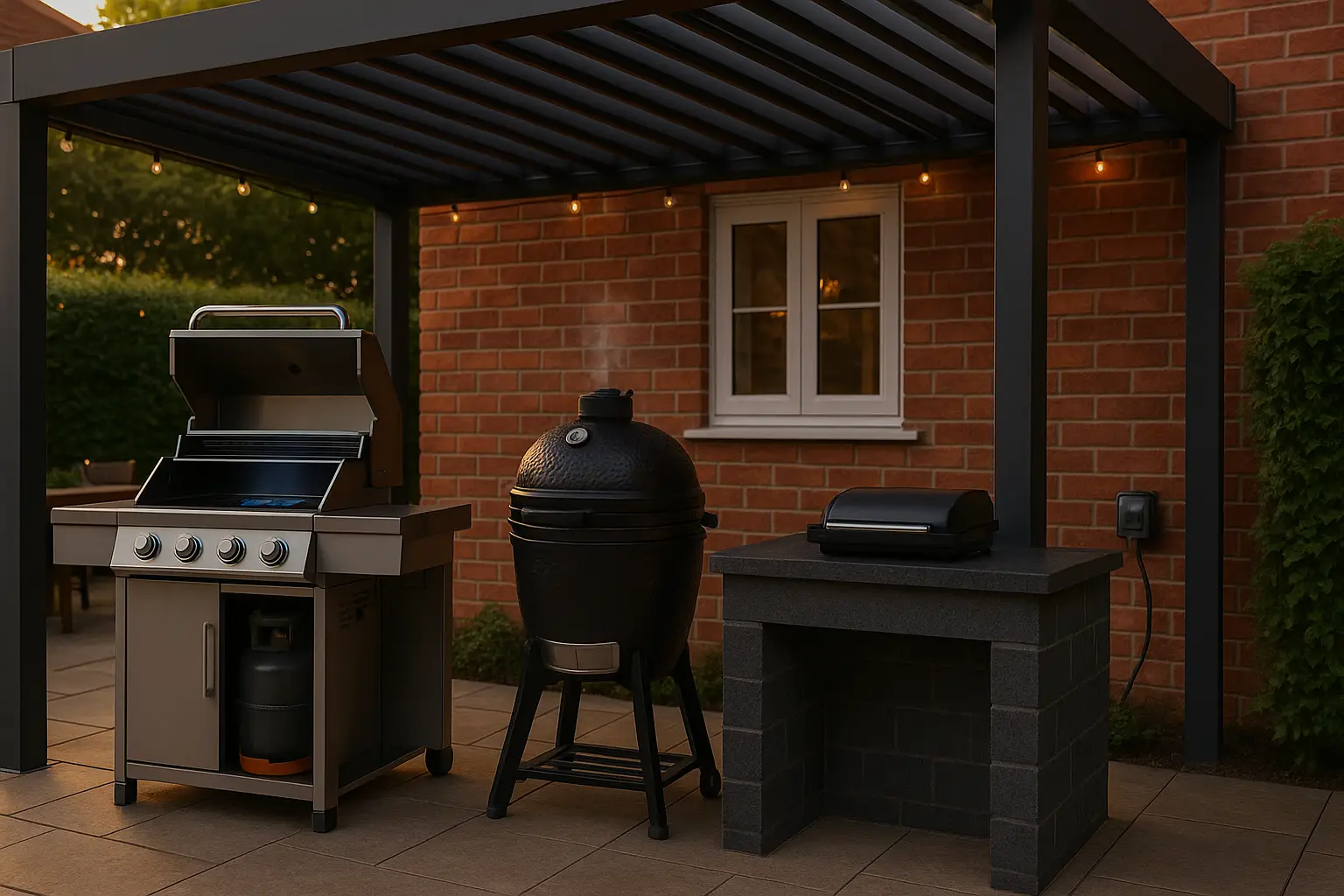
There is no single winner for every garden or every cook. Gas offers control and convenience, charcoal gives flavour and ritual, and electric is the easiest where fuel storage or smoke are restrictions. The right choice depends on how you cook, how close you are to neighbours, and what your site allows for power, gas and ventilation.
What matters most when choosing
Start with your cooking style. If you grill midweek and want fast, repeatable results, gas is hard to beat. If weekends are for long cooks and smoky flavours, charcoal shines. If you live in a flat or a tight terrace with strict rules on fuel and smoke, electric may be the only practical route. Then check practicalities such as available power supply, space for cylinders or charcoal bins, and the direction smoke will travel on still evenings.
Gas: control and convenience
Gas grills reach cooking temperature in minutes and allow precise heat control. That makes them ideal for weekday meals, mixed menus and family gatherings where you are serving in rounds. With multiple burners you can run true two-zone cooking, searing on one side and finishing gently on the other. Cleaning is straightforward if you keep drip trays and flavour bars clear of grease. Gas also produces cleaner combustion than damp charcoal, which helps in close urban streets.
Gas does need a safe storage place for cylinders and a tidy route for the supply line. All fixed connections should be carried out by a Gas Safe professional. Clearances from timber, screens and roof members still apply. In winter, gas lights reliably and holds temperature well under a pergola.
Best for: frequent use, reliable results, lower smoke output, easy weeknight cooking.
Charcoal: flavour and versatility
Charcoal delivers that unmistakable grilled aroma and a wider range of fire-based techniques. With a quality kettle or a ceramic kamado, you can sear steaks at high heat, bake bread, smoke ribs at low heat and everything in between. A kamado holds temperature for hours with modest fuel once it is settled, which is useful in cold weather.
The trade-off is time and smoke at start-up. You need 20 to 30 minutes to get clean heat, and you must manage ash and fuel storage. Flare-ups are more likely if drip trays are missing or the fire is running too hot. Place the cooker where prevailing wind carries smoke away from doors and seating, and keep sides open for airflow. Good technique, dry fuel and lids-down cooking all reduce odours.
Best for: flavour, weekend entertaining, low-and-slow cooks, flexible fire control.
Electric: simple and neighbour friendly
Electric grills are plug-in and go. There is no fuel to store and very little start-up smoke. For flats with balconies, tight terraces or developments with strict rules, electric can be the difference between grilling and not grilling at all. Maintenance is as simple as wiping plates and emptying a drip tray.
Output is the limitation. Many domestic units are 2 to 3 kW, which is fine for burgers, kebabs and vegetables, but they can struggle to deliver the same searing power as a high-end gas grill or a bed of blazing charcoal. They also rely on a suitable outdoor socket on an RCD-protected circuit, with IP-rated fittings and weatherproof covers.
Best for: smoke-sensitive settings, quick snacks, minimal maintenance.
Running costs and effort
Charcoal is usually the most expensive per cook and the most hands-on. Gas sits in the middle for cost and is easy to manage once installed. Electric is often cheap per hour but limited by heat output. The value question is really about your time. If a fast, predictable dinner gets you outside three nights a week, gas wins. If you live for the ritual and the taste, charcoal pays you back in enjoyment. If rules and neighbours make other fuels awkward, electric gives you a straightforward path.
Safety and services in the UK
Whatever you choose, plan services early. Run gas lines and electrical conduits before paving. Keep cylinders upright in a ventilated cupboard, never under direct heat. All outdoor electrics should be installed by a qualified electrician with RCD protection and suitable IP ratings. Respect manufacturer clearances to timber, fabric shades and pergola beams. Add a fire blanket and an extinguisher within reach.
Weather performance
Cold, wind and drizzle are a fact of life. Gas and kamado charcoal cookers hold temperature best in winter. Electric is least affected by wind but may lack headroom for thick steaks outdoors on frosty nights. A louvred or solid roof with gutters will extend your season, as will wind control on the sides without trapping smoke.
What about a hybrid setup
Many clients choose a primary gas grill for everyday meals, then add a kamado or a pizza oven for flavour and weekend cooks. Electric hotplates or teppan units can sit alongside for delicate items and smoke-sensitive dishes. A small, well planned combination often beats one oversized appliance that tries to do everything.
Space, layout and storage
Place the hot zone at the edge of the terrace with clear routes behind the chef. Keep at least 900 mm of walkway around heat sources. Provide closed, ventilated storage for tools and fuel. Charcoal needs sealed bins, gas needs a ventilated cylinder store, and electric needs a safe cable route with drip loops so water cannot track into housings.
Choosing what is best for you
If you cook often and want smooth, repeatable results with less smoke, pick gas. If taste and firecraft top your list and you enjoy a slower pace, pick charcoal. If rules or neighbours limit other fuels, pick electric. If you want the lot, build a small hybrid and let each fuel do what it does best. Match the choice to your habits, your site and your neighbours, and the outdoor kitchen will earn its keep in every season.
Conclusion
Gas wins for speed and control, charcoal wins for flavour and range, and electric wins for simplicity in sensitive settings. The best outdoor kitchens are honest about how they will be used and choose fuels to match. Plan services, safety and shelter first, then select the appliance mix that fits your life.